


Cloud Controller vs On-Prem: What to Consider
Published: September 22, 2026
Quick Answer
-
The real difference is where the controller runs and who maintains it, not whether a business can manage multiple sites; Omada supports multi-site management on compatible on-premises and cloud-based deployments alike.
-
Using cloud infrastructure does not automatically violate the Philippine Data Privacy Act, but a personal information controller stays accountable under RA 10173 Section 21 for data transferred to a third party, domestically or internationally, and the NPC's Advisory No. 2024-01 (May 2024) offers voluntary Model Contractual Clauses for cross-border transfers.
-
An on-premises controller may stay locally accessible during a WAN outage if the controller and LAN remain powered; a Cloud-Based Controller always needs internet connectivity to reach its management interface.
Choosing between a cloud-based controller and an on-premises controller comes down to a handful of practical questions: where do you want it to run, who's going to maintain it, and what happens the day your internet connection drops. Businesses also need to weigh how administrators will access the controller, how many devices and locations it needs to cover, and what data-handling requirements apply, especially for Philippine businesses, where cross-border data processing can bring the Data Privacy Act into the picture. This guide walks through the real differences between cloud-based and on-premises network management, and the factors worth weighing before picking an Omada controller, building on our Multi-Site Network Management pillar, which covers the broader picture of running a network across many branches in the Philippines.
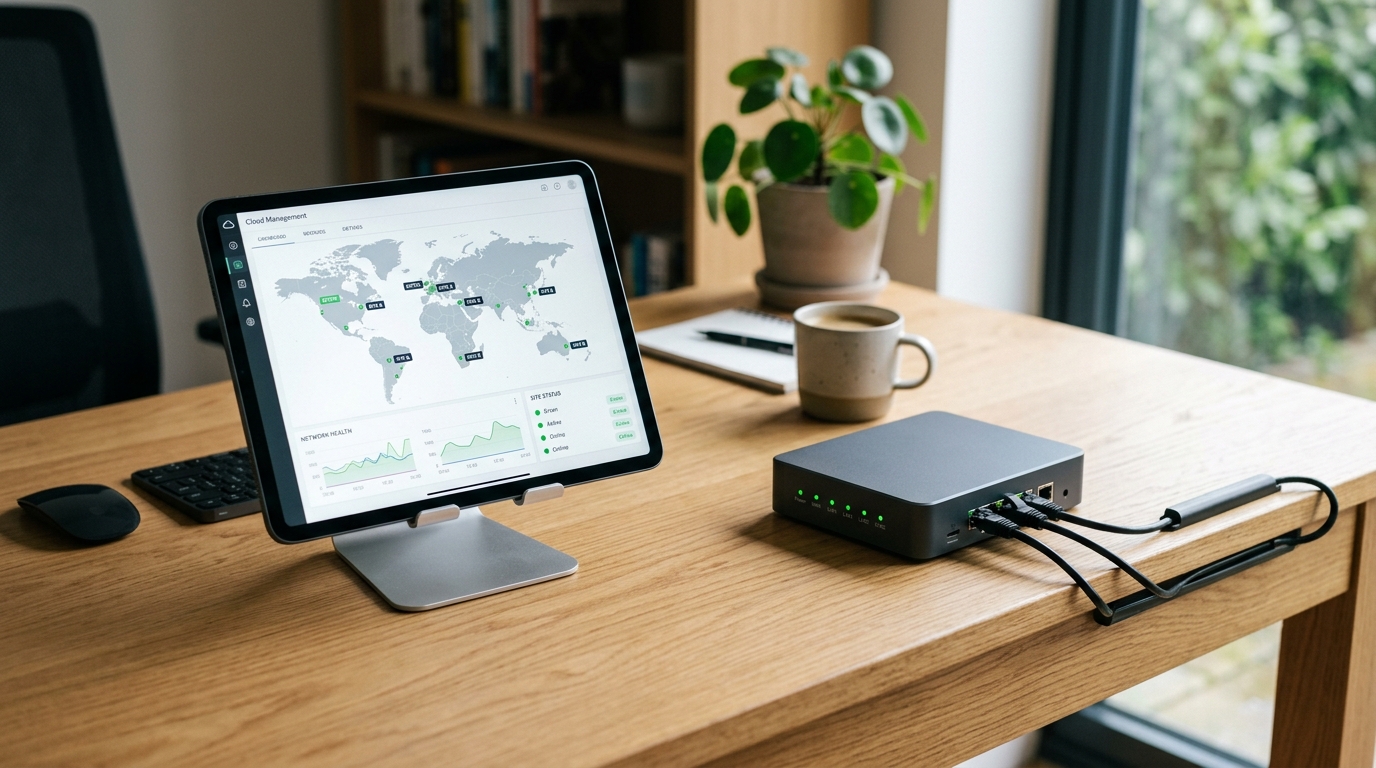
Table of Contents
What's the Difference Between Cloud and On-Premises Controllers?
How Do Cloud and On-Premises Controllers Compare?
Does a Cloud Controller Create Data Privacy Act Problems?
What Happens if Internet Connectivity Is Interrupted?
How Do You Decide Between Cloud and On-Premises Management?
What's the Difference Between Cloud and On-Premises Controllers?
An on-premises controller runs on infrastructure your organization manages directly. With Omada, that can mean a Software Controller deployed on suitable computing infrastructure you already have, or a dedicated Hardware Controller.
A Cloud-Based Controller works differently: it runs on provider-hosted infrastructure and is accessed over the internet, so there's no dedicated controller appliance or controller software to install at the customer premises.
Both approaches give you centralized management either way. The real difference is where the controller service actually runs, and who's on the hook for maintaining that infrastructure.
How Do Cloud and On-Premises Controllers Compare?
|
Factor |
On-premises controller |
Cloud-Based Controller |
|
Controller location |
Runs on organization-managed hardware or infrastructure |
Runs on provider-hosted cloud infrastructure |
|
Local infrastructure |
Requires suitable controller hardware or a software-controller host |
No dedicated on-premises controller installation required |
|
Remote access |
Omada on-premises controllers can support remote management through Cloud Access |
Remote internet-based management is inherent to the cloud service |
|
Multi-site management |
Supported on compatible Omada controller deployments |
Supported |
|
Internet interruption |
Local controller access may remain available if the controller and LAN are operational |
Cloud management access requires internet connectivity |
|
Maintenance |
Organization manages the controller environment, including updates, availability, backups, and host infrastructure |
Provider maintains the cloud controller infrastructure |
|
Data considerations |
Controller service and local controller data are hosted on organization-managed infrastructure |
Controller service and cloud-management data are processed through provider-hosted infrastructure |
|
Provisioning |
Capabilities depend on controller version and deployment |
Compatible cloud deployments support zero-touch provisioning |
Put simply, on-premises means you host it and you maintain it, while cloud means the provider hosts it and handles the upkeep, and that trade-off shows up in every row of the table above, from who patches the software to what happens when your internet goes out.
Neither architecture should be treated as inherently single-site or multi-site. Omada supports multi-site management with compatible on-premises and cloud-based controller solutions, so the choice really depends on your deployment requirements rather than simply how many branches you're running.
Does a Cloud Controller Create Data Privacy Act Problems?
Not automatically. Using cloud infrastructure does not by itself violate the Philippine Data Privacy Act. But when personal data crosses jurisdictions, whether that's between provinces or between countries, your organization stays responsible for complying with applicable privacy requirements.
Under the Data Privacy Act, a personal information controller remains accountable for personal information under its control or custody, including information transferred to third parties for processing, domestically or internationally.
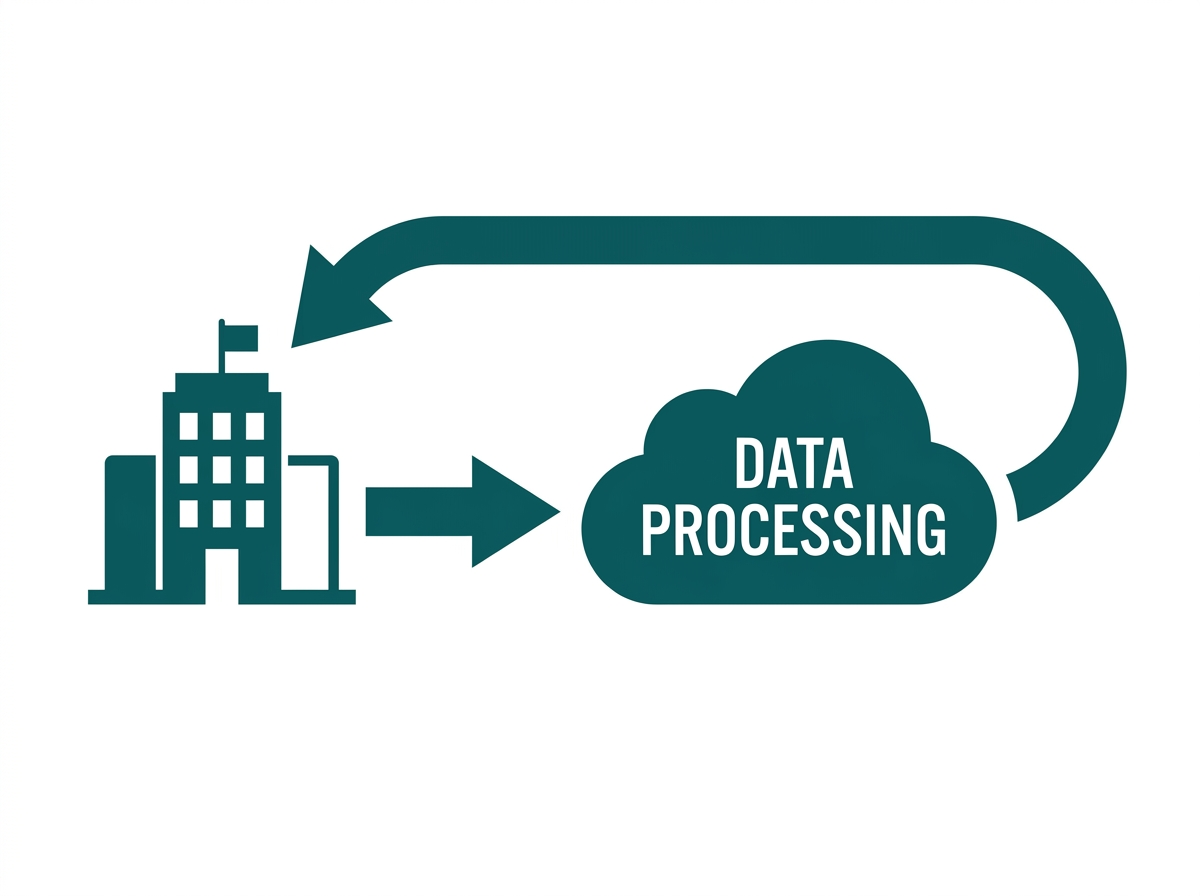
This can become relevant faster than businesses expect. A guest WiFi portal, for example, may collect information that qualifies as personal data depending on how it's configured, and that data still falls under the same accountability rules.
The National Privacy Commission's Advisory No. 2024-01 provides guidance on Model Contractual Clauses for cross-border transfers of personal data. These clauses are available for personal information controllers and processors to include in binding agreements governing cross-border transfers, though using them is voluntary rather than mandatory.
Businesses evaluating a cloud controller should look closely at the provider's data-processing arrangements, contractual safeguards, and hosting setup, alongside their own obligations under Philippine privacy law. If your business has specific data-residency requirements, it's worth confirming the current hosting arrangements for the cloud service you're considering rather than assuming where the data will actually sit.
What Happens if Internet Connectivity Is Interrupted?
The effect really depends on what kind of interruption you're dealing with and which network features are in use.
If connectivity to the controller or cloud service drops, Omada devices can keep operating with whatever configurations were already applied. That said, not every controller-dependent function stays available. Certain services, including some portal authentication functions, need the Omada Controller to stay running and reachable to work.
With an on-premises controller, administrators can often still reach it over the local network if the controller and LAN are still operational, even when the WAN connection is down. A Cloud-Based Controller, on the other hand, needs internet connectivity to reach its remote management interface, full stop.
So the question worth asking isn't just whether the network "stays up." It's which controller-dependent services your business actually relies on, and how those specific services behave when controller or internet connectivity drops.
A power outage is a separate issue entirely. Network equipment simply can't keep running without power unless there's backup power in place to cover it.
How Do You Decide Between Cloud and On-Premises Management?
A few questions can help narrow this down.
1. How do you want to host the controller?
An on-premises deployment puts your organization in charge of the controller infrastructure. A cloud-based deployment leans on provider-hosted infrastructure instead.
2. Who will maintain the controller environment?
Software Controller deployments need suitable host infrastructure on your end. Hardware Controllers give you dedicated controller hardware. Cloud-Based Controllers remove the need to maintain any dedicated controller infrastructure on-premises at all.
3. How important is local management during a WAN outage?
An on-premises controller can stay locally accessible when internet connectivity drops, as long as the controller and local network are still running. Cloud controller management needs connectivity to the cloud service to work at all.
4. Do administrators need remote access?
Both approaches can support remote management. Cloud-Based Controllers are built around internet-based access from the start. Compatible Omada Software and Hardware Controllers can also use Omada Cloud Access for remote management.
5. What personal data is processed?
If your network features collect or process personal data, figure out where and how that information gets processed, and what privacy and contractual requirements apply as a result.
6. What's the total cost for this specific deployment?
Rather than assuming one architecture is automatically cheaper, compare the actual costs tied to your intended deployment. For on-premises, that can include hardware, host infrastructure, administration, maintenance, backup, and replacement costs. For cloud-based management, look at the service tier, licensing model, managed-device count, and required features.
Frequently Asked Questions
Is a cloud controller less secure than an on-premises controller?
Not inherently. Cloud and on-premises architectures carry different security and operational responsibilities, depending on factors such as authentication controls, administrator permissions, configuration, software and firmware maintenance, network architecture, provider safeguards, and credential protection. For on-premises deployments, the organization secures and maintains its own controller environment; with a Cloud-Based Controller, the provider maintains the underlying infrastructure while the customer remains responsible for administrator accounts, permissions, and configuration.
Where are Omada's cloud controller servers located?
Omada's cloud services use provider-hosted infrastructure. The exact hosting and data-processing arrangements applicable to a particular service, account, or region should be confirmed using current Omada service documentation and contractual information. Businesses with data-residency or regulatory requirements should verify current hosting arrangements rather than assume where their data will be stored.
Does using a Cloud-Based Controller mean giving up local control during an outage?
A Cloud-Based Controller requires internet connectivity to reach its management interface. Managed devices can continue operating with configurations already applied when controller connectivity is interrupted, though some controller-dependent services may not remain available. With an on-premises controller, the controller may remain accessible through the local network if both the controller and LAN are still operational.
Which option costs more over five years?
There is no universal answer. Total cost depends on the number of devices, required features, controller hardware, server resources, licensing, maintenance, administrative time, redundancy requirements, and expected growth. A meaningful comparison calculates the costs of the specific deployment rather than assuming either architecture is automatically cheaper.
Can a business switch from on-premises to cloud later?
Controller architecture doesn't necessarily have to stay unchanged for the life of the network. Omada provides migration capabilities and procedures for supported controller environments, though the exact process depends on the source and destination controller versions, supported devices, configuration, and migration method. Review current Omada migration documentation before beginning.
Final Thoughts
The cloud-versus-on-premises decision isn't really a choice between multi-site and single-site networking. Both approaches can support centralized and multi-site management in compatible Omada deployments.
The differences that actually matter are where the controller runs, who maintains its infrastructure, how administrators access it, what happens when connectivity to the controller drops, which provisioning and management capabilities you need, and how you want network-management data to be handled. Philippine businesses processing personal data should also weigh applicable Data Privacy Act requirements when evaluating cloud services and cross-border processing.
For the broader picture of managing networks across multiple locations, see our Multi-Site Network Management guide, or read up on what Software-Defined Networking actually does to see the architecture your controller choice sits on top of.
Ready to compare controller options side by side? Compare Omada's Software, Hardware, and Cloud-Based Controllers side by side, or talk to an Omada specialist about which architecture fits your branch count, IT resourcing, and data-handling requirements.