Top 5 Networking Challenges Facing K–12 Schools

Modern K–12 education depends on reliable connectivity. Digital classrooms, cloud-based learning platforms, and online assessments all rely on school networks to function smoothly.
However, many existing networks were not designed to support today’s demands. The rapid growth of one-to-one devices, video-based learning, and cloud applications has placed increasing strain on infrastructure — while IT teams are expected to manage performance, security, and scalability with limited resources.
For school IT administrators, the question is no longer whether to modernize network infrastructure, but how to overcome the challenges standing in the way.
Below are the top five networking challenges facing K–12 schools today — and what it takes to solve them.
Challenge #1: Bandwidth Limitations and Network Congestion
One of the most common issues schools face is insufficient bandwidth to handle modern digital learning demands.
Today’s classrooms rely heavily on bandwidth-intensive applications such as video streaming, virtual collaboration tools, and cloud-based platforms. During peak usage times — such as school-wide online testing or simultaneous video lessons — networks can quickly become overwhelmed.
The result is often:
- Slow connection speeds
- Dropped sessions or buffering
- Interrupted lessons
- Frustrated students and teachers
Even districts that meet bandwidth benchmarks may still struggle in real-world scenarios. While many schools meet baseline targets, millions of students continue to experience insufficient connectivity during daily use.
This highlights an important point: bandwidth alone isn’t enough. Schools need infrastructure that can handle spikes in usage while maintaining consistent performance across all users.
 According to latest data, up to 84% of US public schools have 1:1 device policies, creating high-density environments that can put a strain on networks.
Challenge #2: Supporting High-Density and BYOD Environments
While bandwidth addresses the volume of data, device density introduces a separate challenge: the number of devices competing for access.
Many schools have adopted one-to-one programs, and Bring Your Own Device (BYOD) policies that further increase the number of connected devices. Students often connect multiple devices simultaneously, including laptops, tablets, and smartphones.
This creates high-density environments where:
- Dozens of devices rely on a single access point
- Device load per access point is unpredictable
- Performance varies significantly across locations
Without proper Wi‑Fi design and sufficient access point coverage, networks can become congested at the device level — even if bandwidth is sufficient.
The result is inconsistent user experiences. Students may struggle to stay connected, while teachers face disruptions when delivering lessons.
To address this challenge, schools need Wi‑Fi solutions designed for high-density environments, with optimized coverage and the ability to support large numbers of concurrent connections.
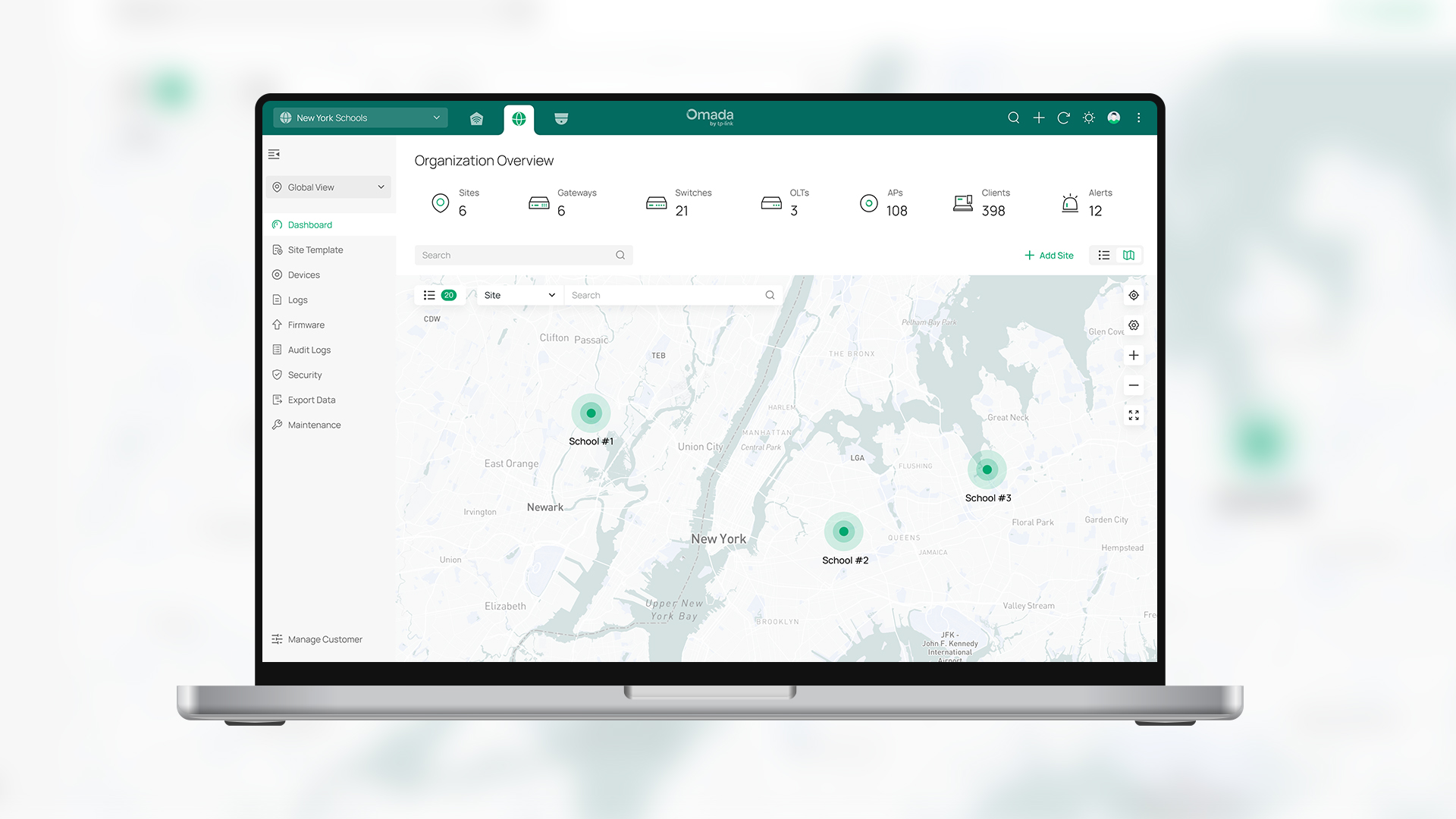 School network IT administrators often have to manage multiple schools with more than one building. Having a centralized management interface, like Omada’s SDN, helps bring management and control all into one single pane of glass, with ability to remotely manage and remedy any network issues that arise.
Challenge #3: Limited IT Resources and Complex Network Management
Another major challenge facing K–12 institutions is limited IT staffing.
In many districts, small IT teams are responsible for managing:
- Multiple campuses
- Thousands of student and staff devices
- Network infrastructure across classrooms, offices, and outdoor areas
It’s not uncommon for just a handful of IT professionals to support tens of thousands of users. As technology adoption increases, the workload on these teams continues to grow.
Without the right tools, this leads to:
- Slow troubleshooting
- Increased downtime
- Limited visibility into network performance
- Difficulty managing distributed environments
Managing networks manually at this scale is not sustainable.
Centralized management solutions help address this issue by providing a single interface for monitoring and control. IT teams can quickly identify and resolve issues remotely, while automation reduces repetitive tasks such as updates and configuration changes.
For understaffed teams, simplifying network management is critical to maintaining reliable operations.
 Up to 82% of K-12 schools in the US have experienced a cyber threat, with top incidents being ransomware attacks, phishing, and data breaches.
Challenge #4: Increasing Cybersecurity Threats in K-12 Schools
K–12 schools are increasingly targeted by cyberattacks due to the sensitive data they manage and limited resources available to secure their systems.
Common threats include:
- Ransomware attacks that disrupt operations
- Phishing attempts targeting staff and students
- Data breaches exposing sensitive information
These incidents can interrupt learning, compromise personal data, and create financial and reputational risks for institutions.
To mitigate these threats, schools must integrate security into their network strategy. Key measures include:
- Segmenting student, staff, and administrative networks
- Enforcing access controls and authentication policies
- Monitoring network activity for suspicious behavior
By embedding security into the network itself, schools can protect users and data without sacrificing performance or usability.
 The E-Rate program is a federal initiative to help schools and libraries get affordable internet and phone services. There are requirements for acceptance, but qualified schools can receive anywhere from 20% to 90% off on tech upgrades and services.
Challenge #5: Maximizing Network Investments Within Budget
Budget limitations remain one of the biggest obstacles to modernizing school networks. As connectivity demands continue to grow, schools must find ways to deliver reliable, high-performance networking while making the most of available resources.
Programs such as E‑rate help many schools stretch technology budgets and invest in critical network infrastructure. By combining available funding opportunities with thoughtful planning, schools can improve connectivity, support digital learning initiatives, and build a foundation for future growth.
Key considerations include:
- Maximizing the value of available technology budgets
- Planning for long-term scalability and growth
- Balancing performance, reliability, and affordability
- Selecting solutions that reduce total cost of ownership over time
Cost-effective networking solutions play an important role in helping schools achieve these goals. With enterprise-grade performance, centralized management, and scalable deployment options, solutions like Omada enable schools to modernize their networks without exceeding budget constraints. Whether leveraging E-Rate funding or investing through other budget sources, schools can deploy reliable networking infrastructure that supports both current needs and future expansion.
 Omada’s Campus and EAP series Access Points are designed to handle high-density environments. With seamless roaming, load balancing, and band steering, Omada’s Campus APs can handle up to 1,500 connected clients per AP (depending on usage and network capacity).
Overcoming K-12 Network Challenges with Modern Solutions
While these challenges are significant, modern network solutions like Omada are designed to address them.
Key capabilities include:
Scalable Wi‑Fi infrastructure
Designed to support high-density classrooms and growing device counts without sacrificing performance.
Cloud-Based Centralized Management and Automation
Provides a single pane of glass for monitoring, troubleshooting, and managing networks across multiple campuses. Automated provisioning, policy management, and updates help IT teams reduce manual workload, improve operational efficiency, and resolve issues faster.
Built-in security and segmentation
Protects sensitive data while maintaining safe and appropriate access.
Education-Focused Expertise and Guidance
Backed by deep networking expertise and experience supporting K–12 environments, Omada helps schools navigate infrastructure planning, deployment, and modernization strategies with confidence.
Conclusion: Addressing Network Challenges is Key to Student Success
Reliable network infrastructure is essential to modern K–12 education.
From managing bandwidth demands and high-density device environments to addressing security risks and budget constraints, schools face a range of challenges that directly impact teaching and learning.
By investing in scalable, centralized, and cost-effective network infrastructure, schools can overcome these challenges and build a reliable foundation for modern learning — ensuring students and educators have the connectivity they need to succeed.