


10 Gigabit Switches
for Business Networks
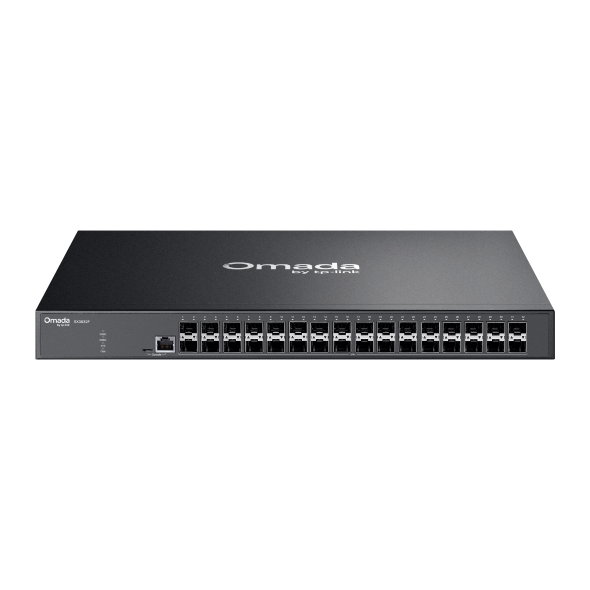
Omada 10 gigabit switches provide high-bandwidth infrastructure for access, aggregation and core network layers where multiple access switches, servers, and storage systems converge. Available configurations range from compact desktop models to enterprise-grade stackable switches with Layer 3 routing capabilities. Managed models support centralized cloud control across distributed sites.

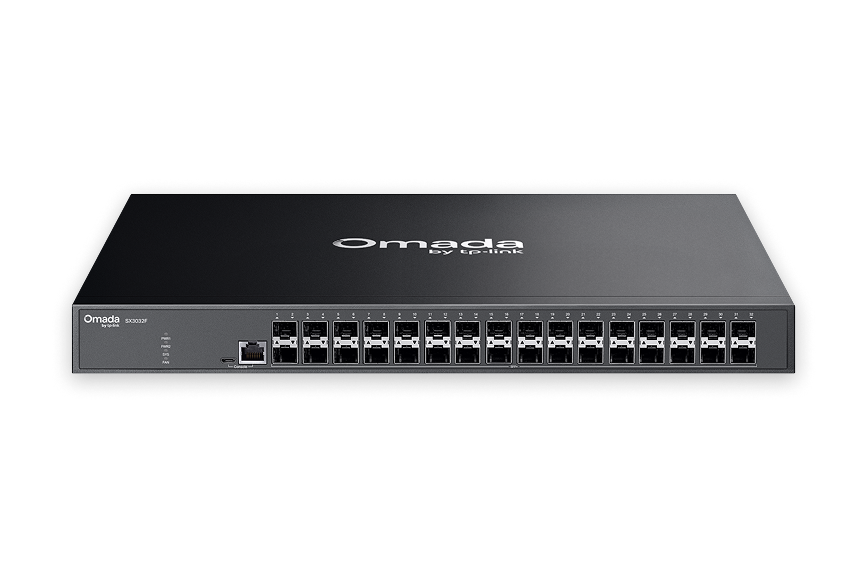
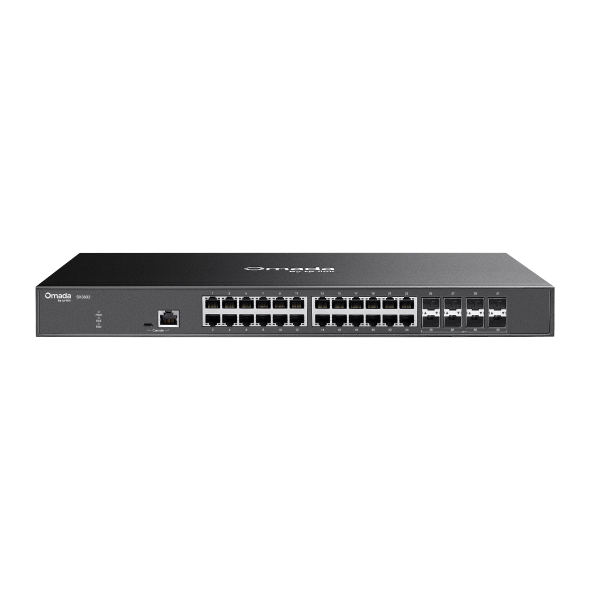
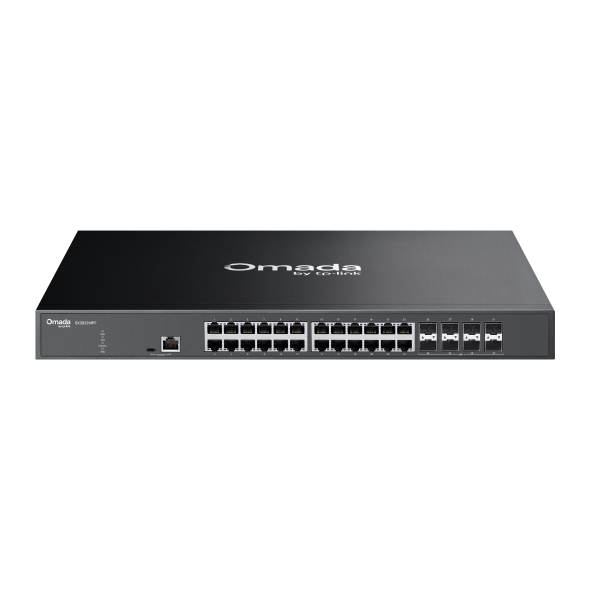
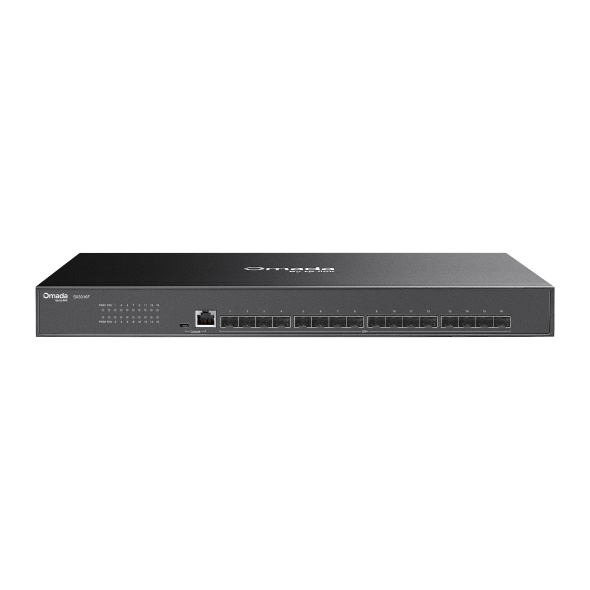
Recommended 10G Switches
View All


Business Benefits

Right-Sized for Your Network
Start with a compact desktop switch for a small workgroup or deploy high-density rack units for enterprise infrastructure. As bandwidth needs grow, copper ports handle direct device connections while fiber ports support longer distances between buildings or network closets.

Manage Multiple Switches
Stackable models let you configure an entire stack from a single interface rather than logging into each switch individually. When you need to make changes, they apply everywhere at once. If a unit fails, traffic automatically reroutes so your network stays operational without IT intervention.

Route Between Networks Without Extra Equipment
Enterprise models handle routing between different parts of your network.

Power Devices Through Network Cables
Select models deliver power and data through the same cable to access points, security cameras, and phones. This means less cabling to install and lower installation costs, especially useful when adding network equipment in areas where running new electrical lines would be expensive or impractical.

Control from Anywhere, or Hands-On
Manage all your switches from one cloud interface accessible on your laptop or phone, or manage each switch directly through its web interface or command line when you prefer local control.

Part of a Complete System
These switches integrate with Omada gateways, and access points under unified management, so network policies stay consistent across your entire infrastructure rather than requiring separate configuration for each component type.
Solving Connectivity Challenges
Businesses choose 10 gigabit switches when they need high-speed connections between servers, storage, access points, workstations and access switches.

When your network spans multiple buildings, 10G backbone between locations prevents slowdowns as more employees connect and bandwidth demands grow. This keeps applications responsive and file access fast, even during peak usage hours.

Direct 10G connections to storage systems mean backup operations complete faster, and multiple employees can access shared files simultaneously without experiencing delays that slow down productivity.

When you're hosting events, conferences, or simply having high occupancy periods, 10G core switches handle the traffic load from multiple access points without creating bottlenecks that would otherwise cause dropped connections or slow internet speeds for guests and employees.

Creative teams, engineering departments, and anyone working with large files benefit from 10G workstation connections. Employees can edit and work directly from network storage in real-time rather than waiting for file transfers or filling up local hard drives.

For businesses with branch offices or multiple sites, stackable 10G switches with Layer 3 routing efficiently direct traffic between locations and cloud services.

Keep payment processing separate from guest Wi-Fi, or patient records separate from general office access. 10G layer 3 switches enforce these security boundaries, helping you meet regulatory requirements without adding complexity to your network infrastructure.
FAQs
What is a 10G network switch used for? 
A 10 gigabit switch connects network devices requiring bandwidth beyond standard gigabit speeds. Common applications include aggregating traffic from multiple access layer switches, connecting servers and storage systems, supporting high-density wireless deployments, and providing direct 10G connections to workstations handling bandwidth-intensive applications like video editing or engineering design.
Do I need 10G switches for a small office network?
Most small office networks with standard business applications operate effectively with gigabit and 2.5G switching. Consider 10G infrastructure when deploying high-density wireless access points, connecting NAS storage accessed by multiple users concurrently, aggregating multiple gigabit switches, or supporting specialized workstations with 10G network adapters for media production or technical applications. Compact desktop models provide cost-effective 10G connectivity for smaller deployments.
Are 10G switches typically used at the access, aggregation, or core layer?
10G switches serve multiple network layers depending on configuration. Pure fiber models with SFP+ ports typically aggregate traffic from multiple access layer switches. Switches with 10GBASE-T ports connect directly to high-performance endpoints like advanced wireless access points or workstations requiring native 10G connectivity.
Do 10G switches support Layer 3 routing features?
Omada 10G switches are available in both Layer 2+ and Layer 3 configurations. Layer 3 models support advanced routing protocols. Layer 2+ models handle static routing for basic inter-VLAN traffic.
What is the difference between 10GBase-T and SFP+ ports?
10GBase-T ports use standard network cables with RJ45 connectors. SFP+ ports use transceiver modules that you swap based on what you're connecting: fiber for distance or copper DAC cables for nearby equipment. Different models offer different combinations of these port types.