


Campus Switches
for Enterprise Networks
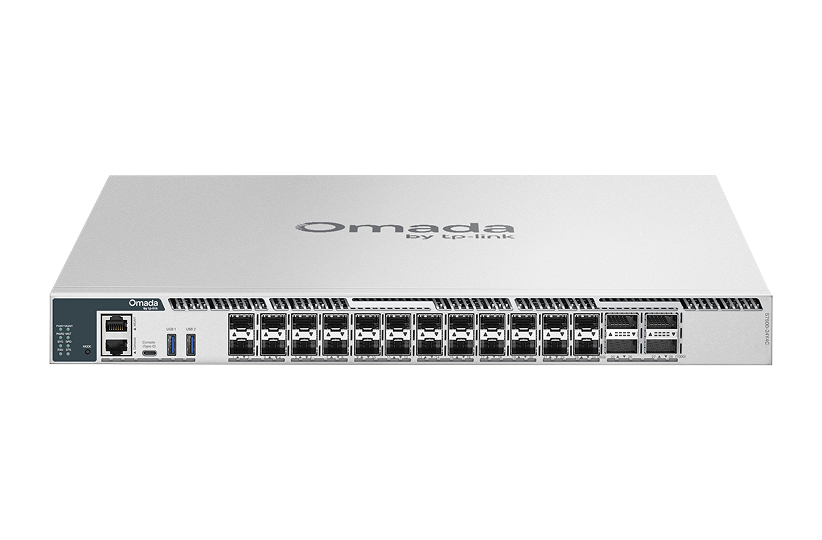
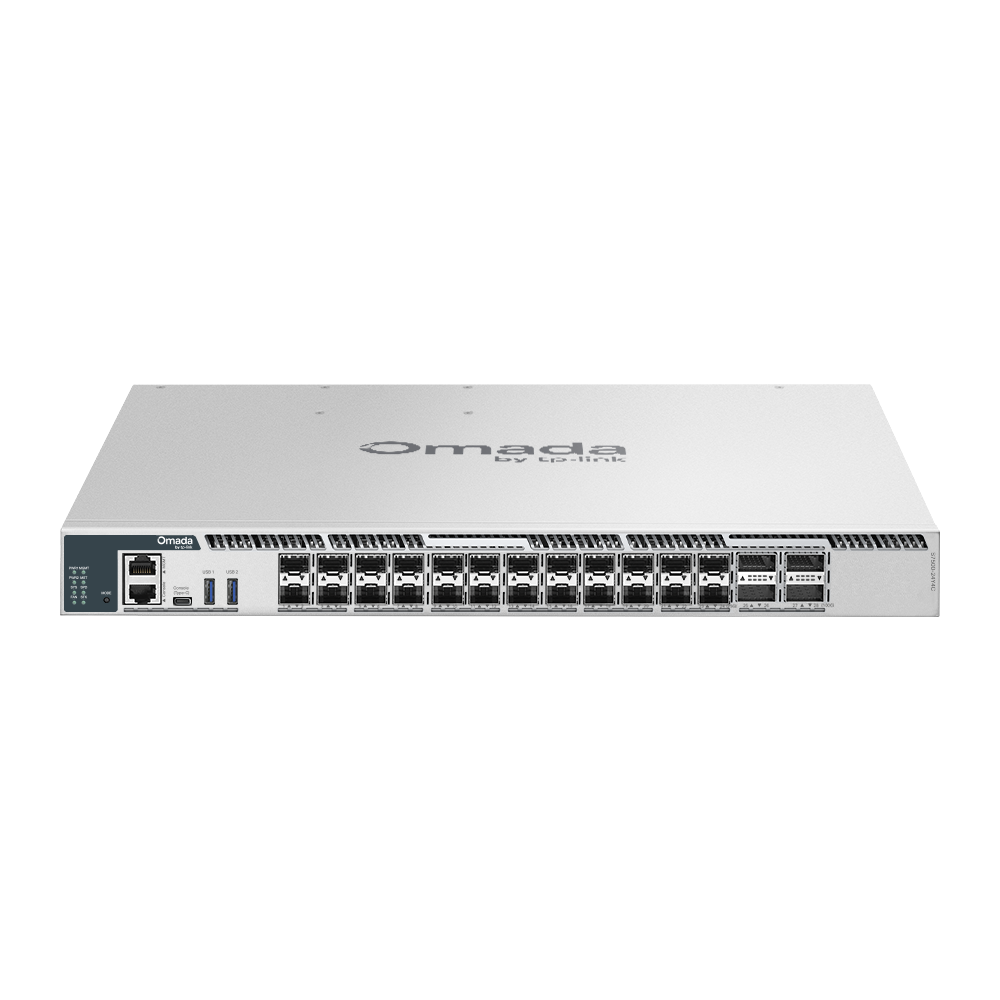
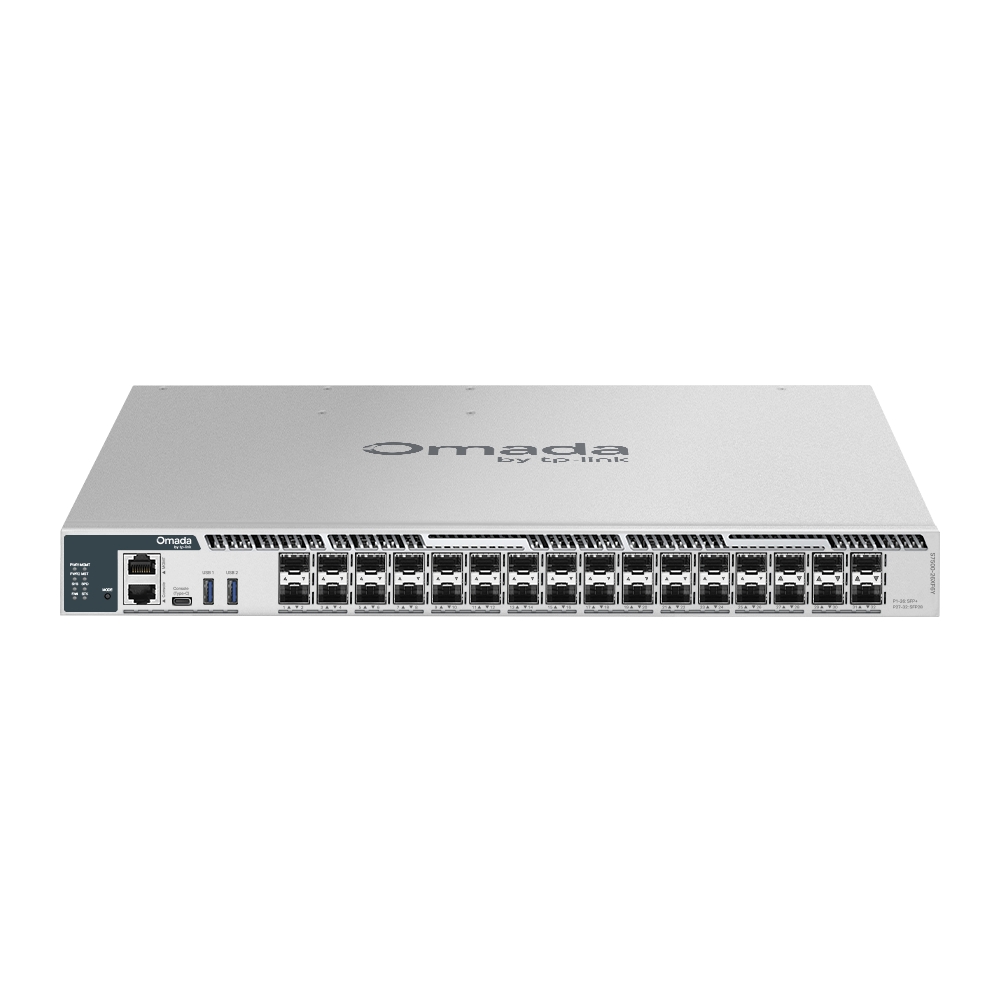
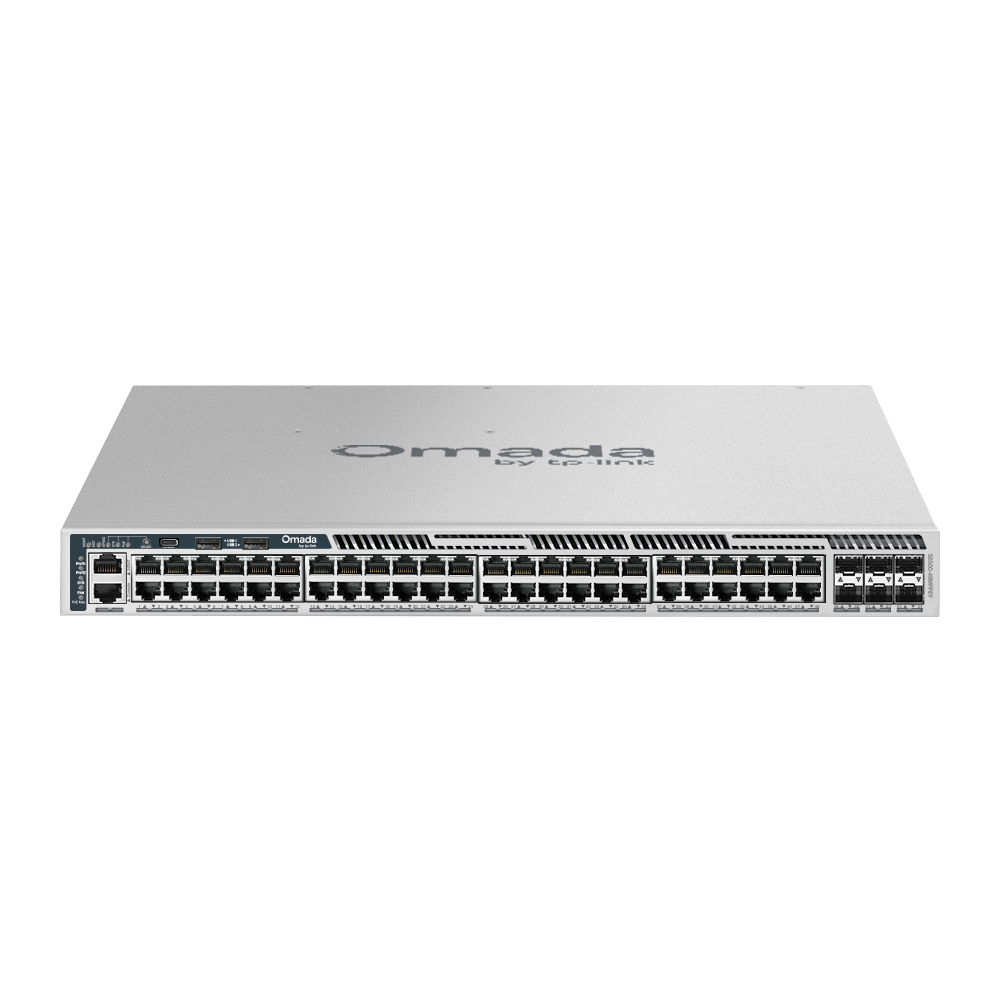
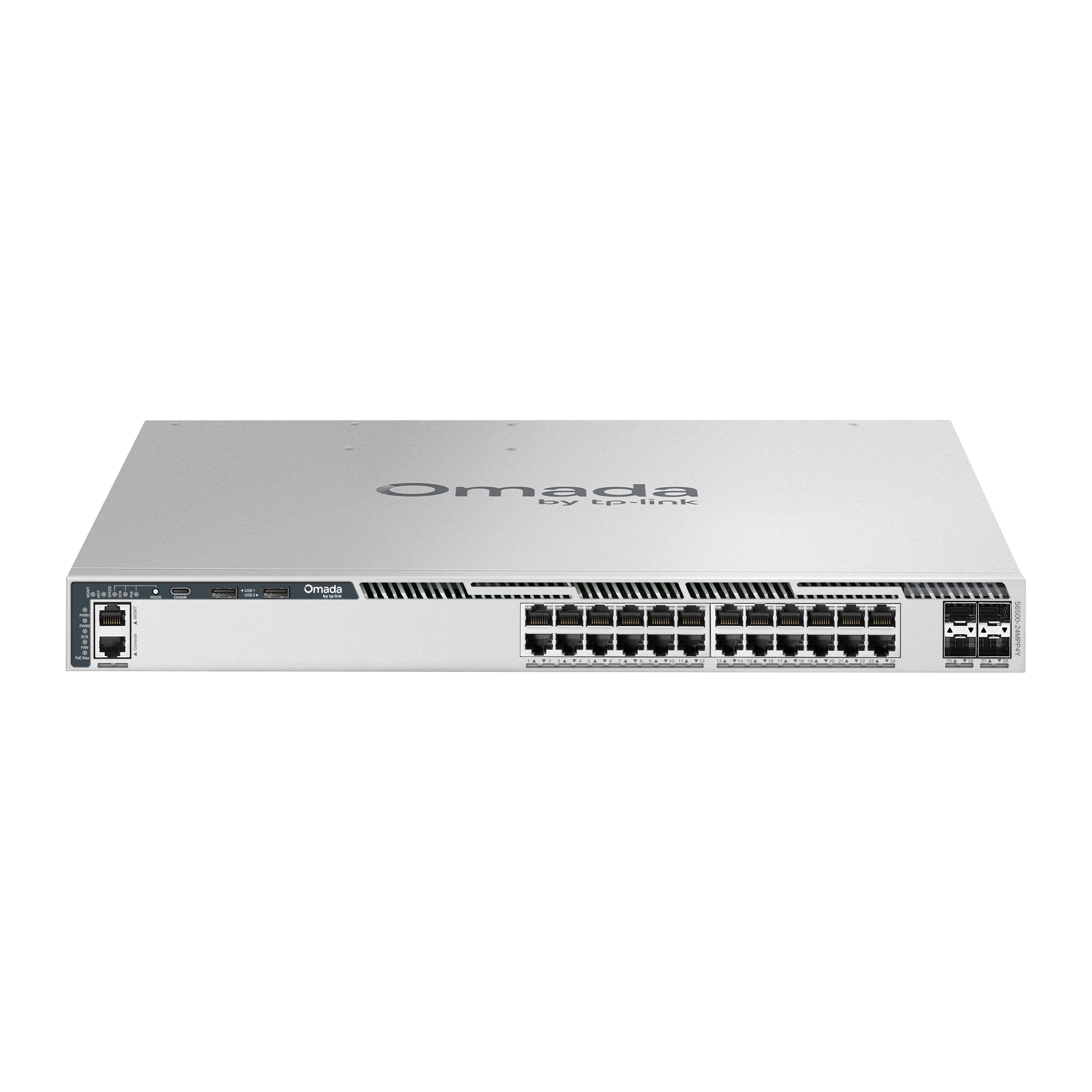
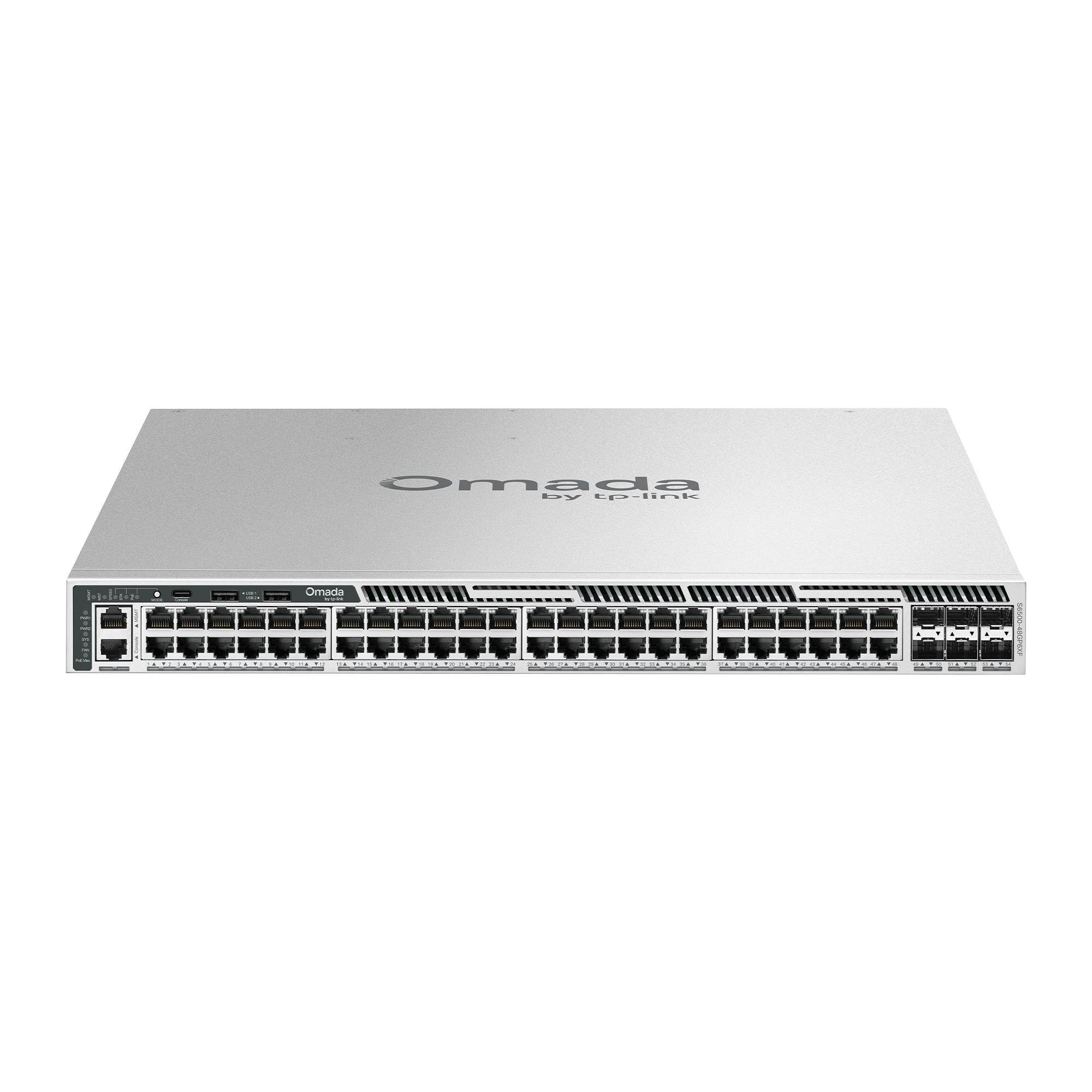
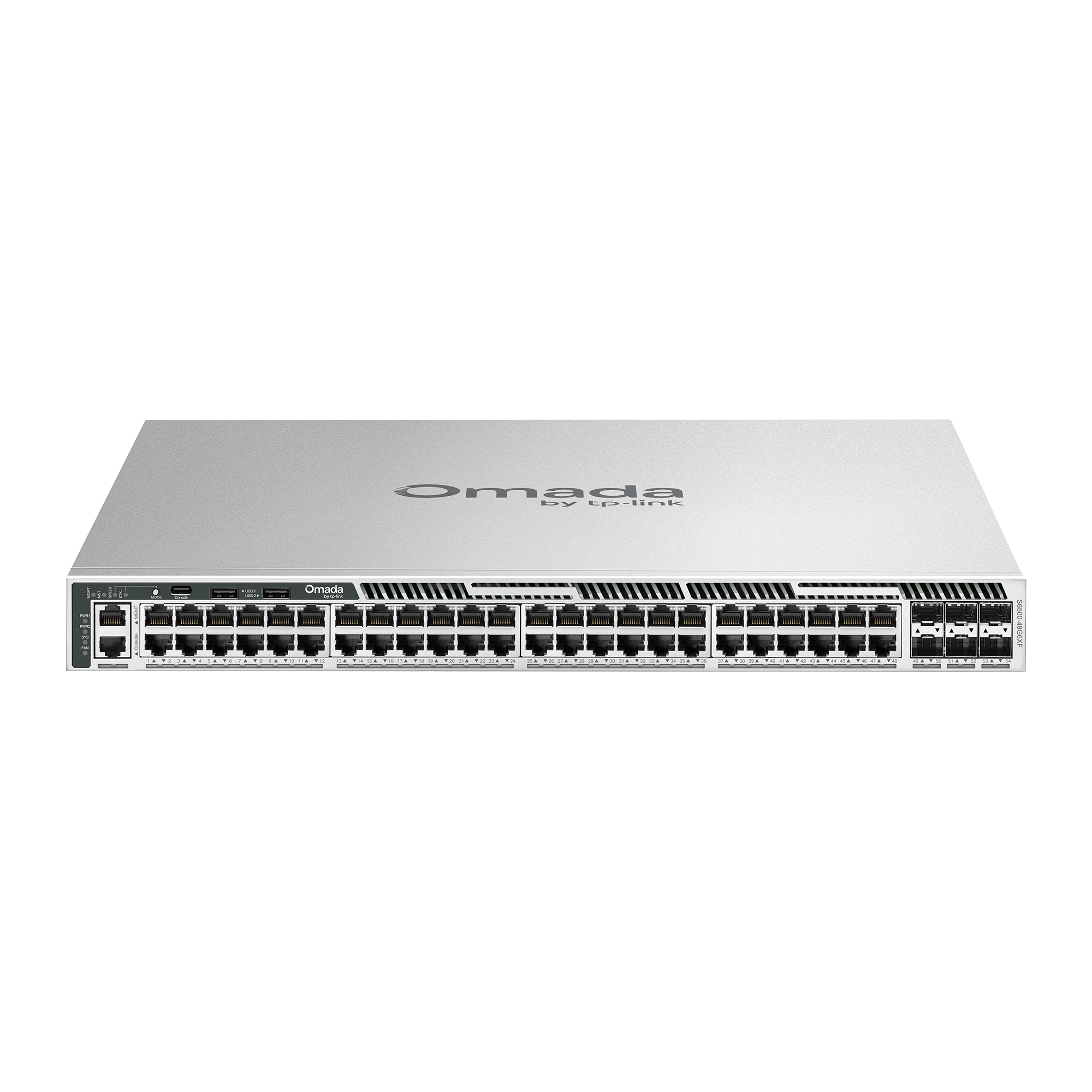
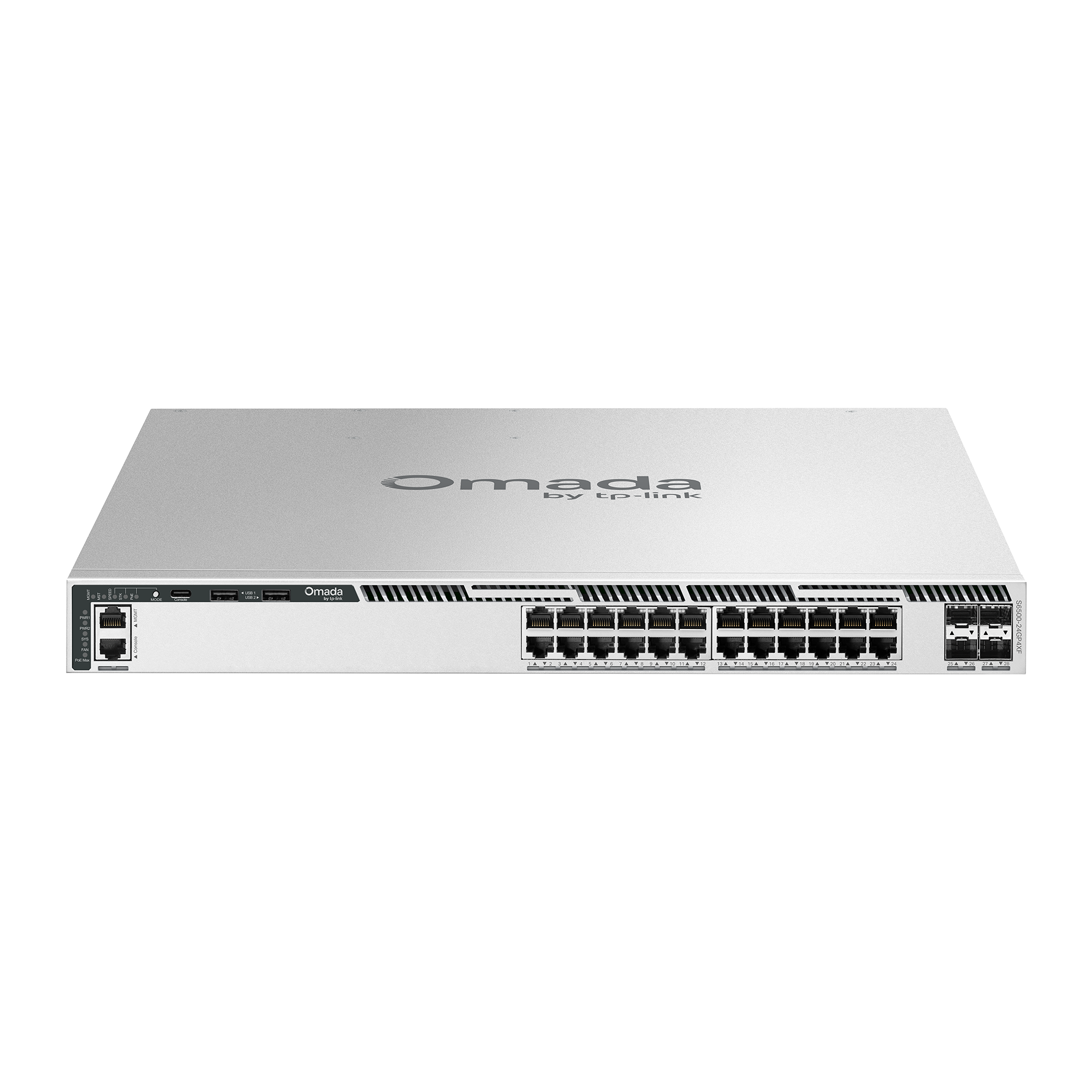
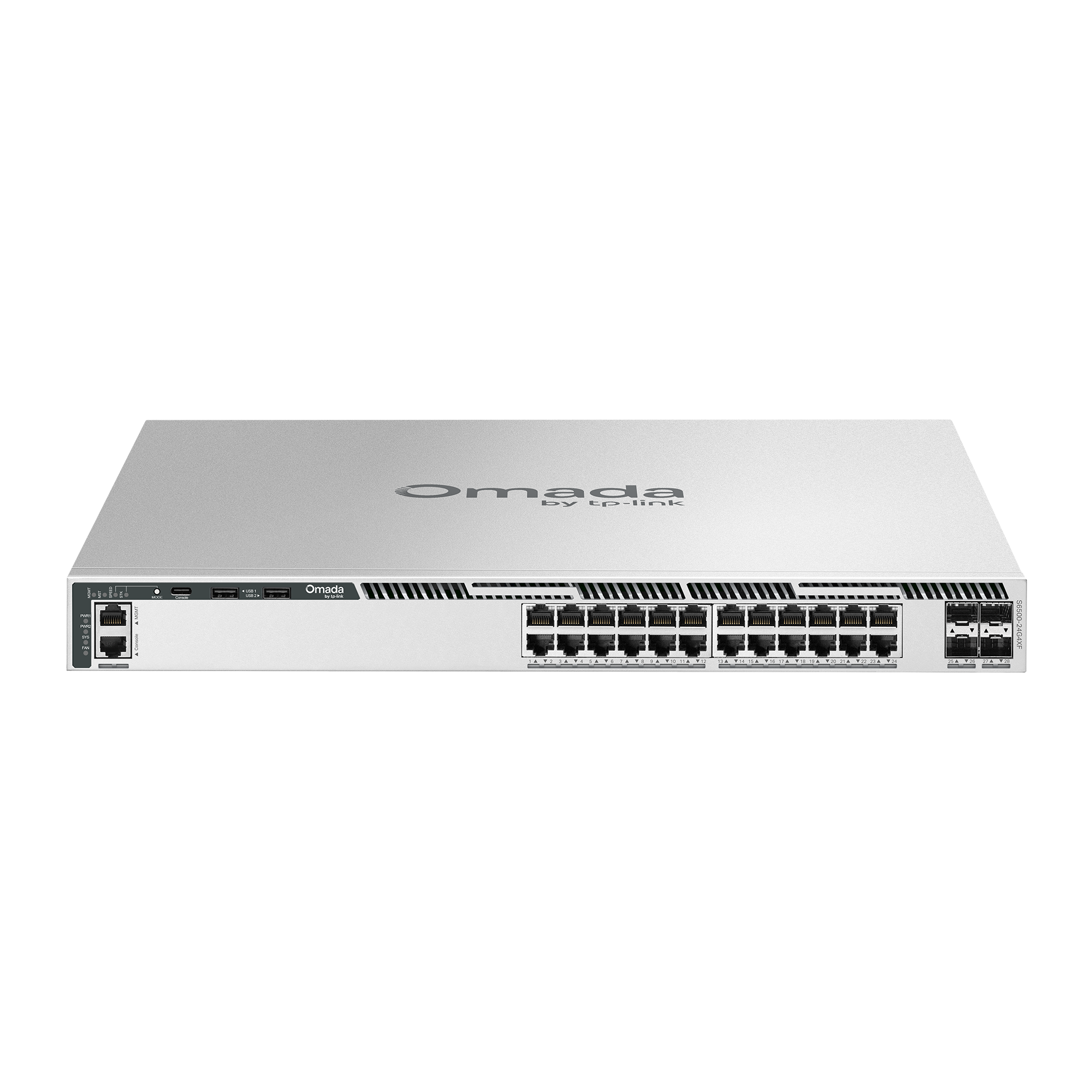
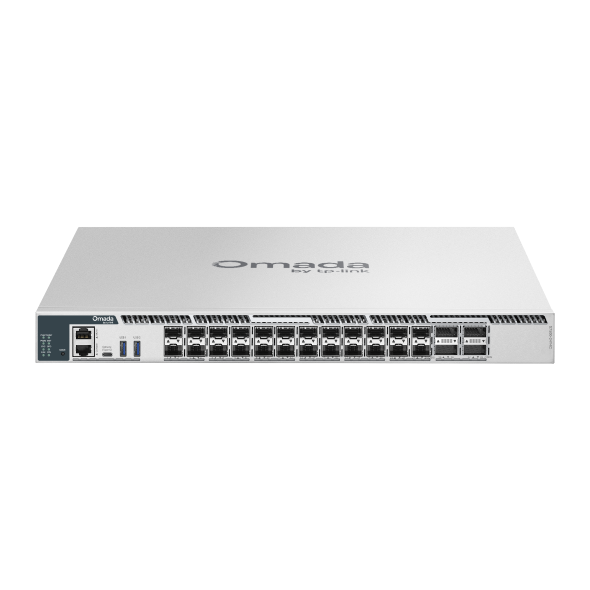
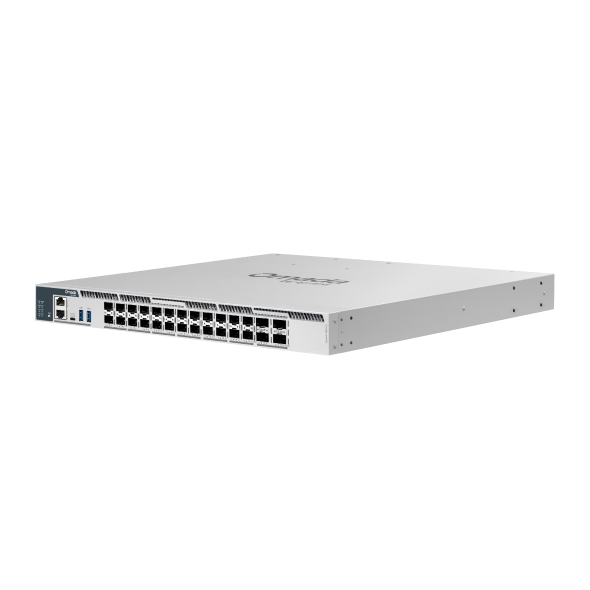
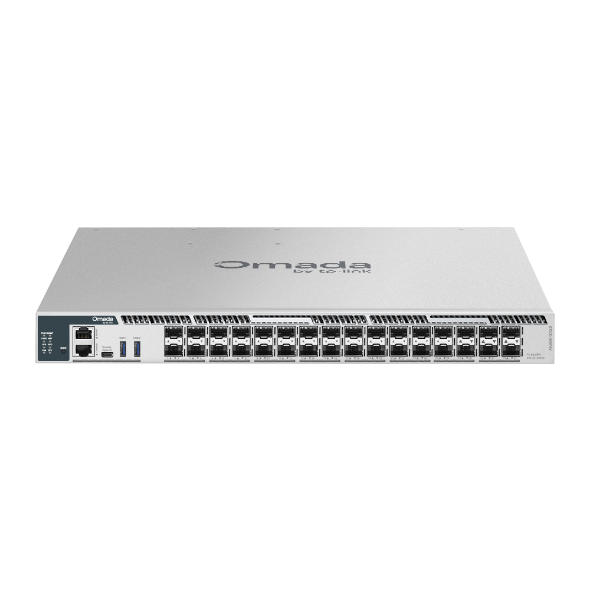
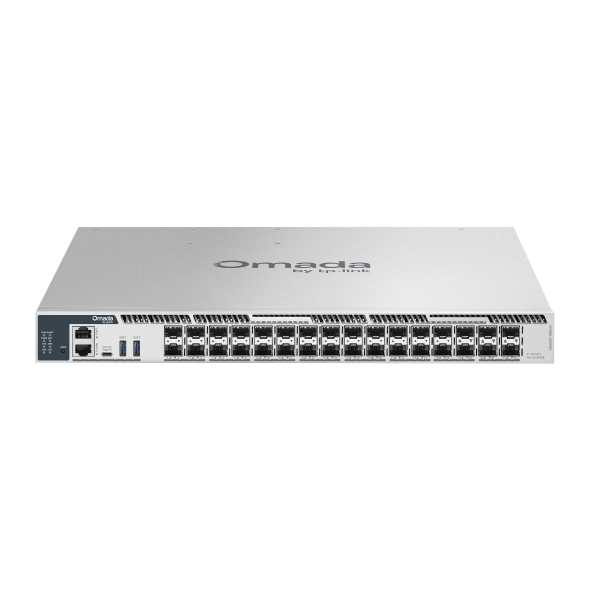
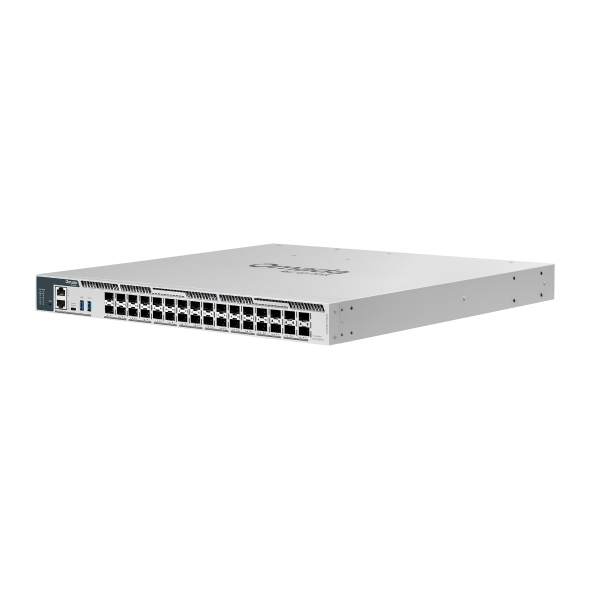
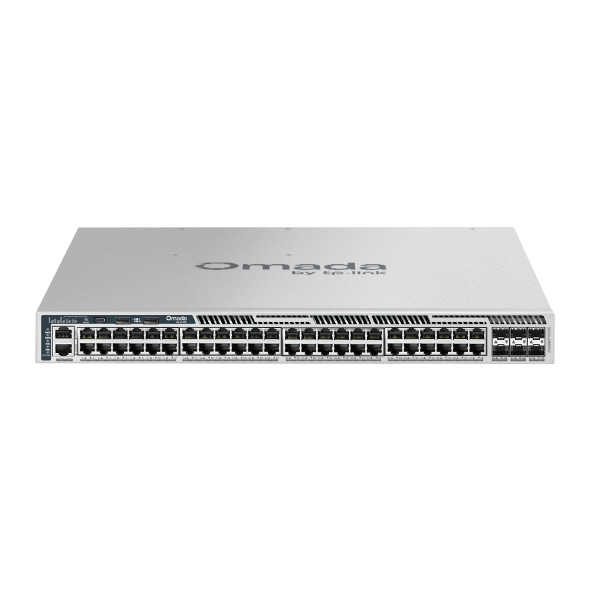
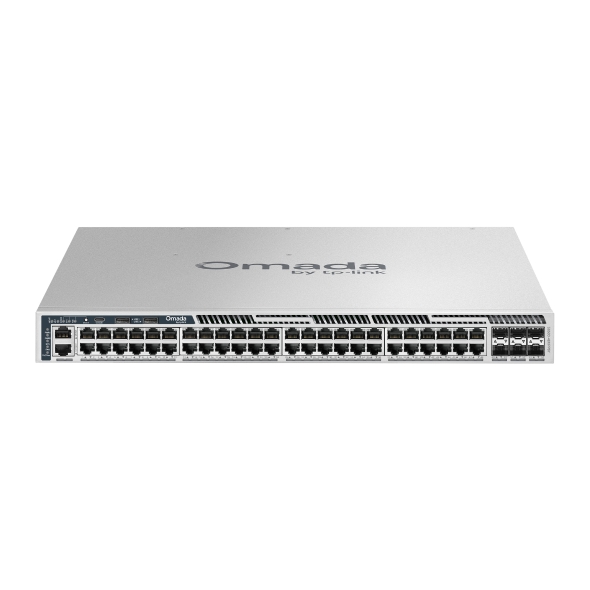
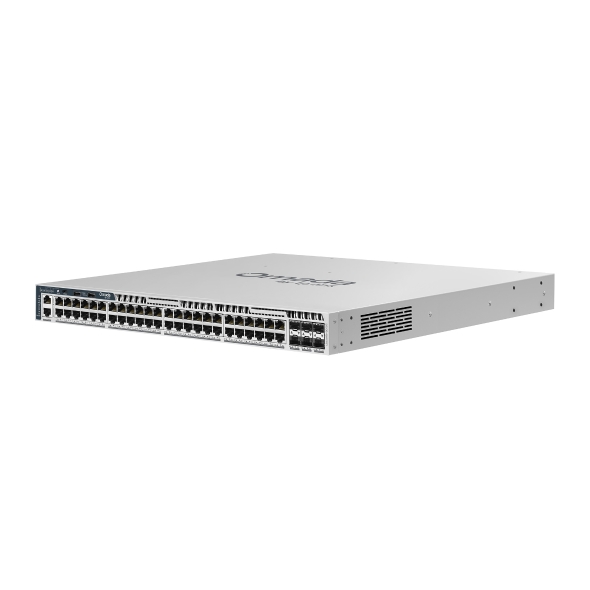
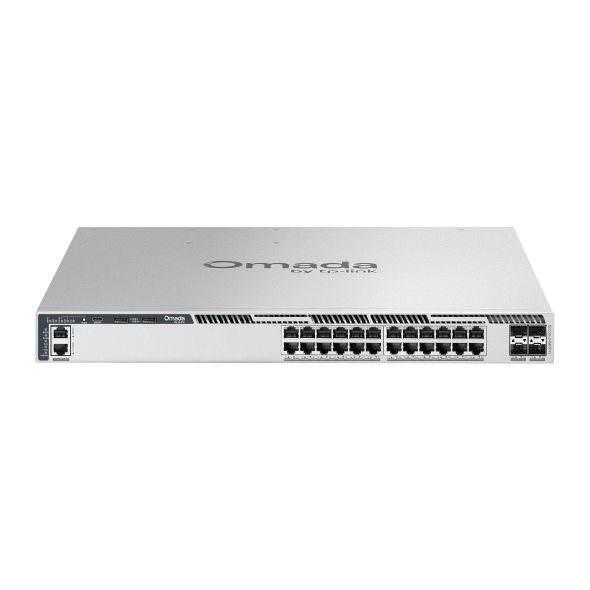
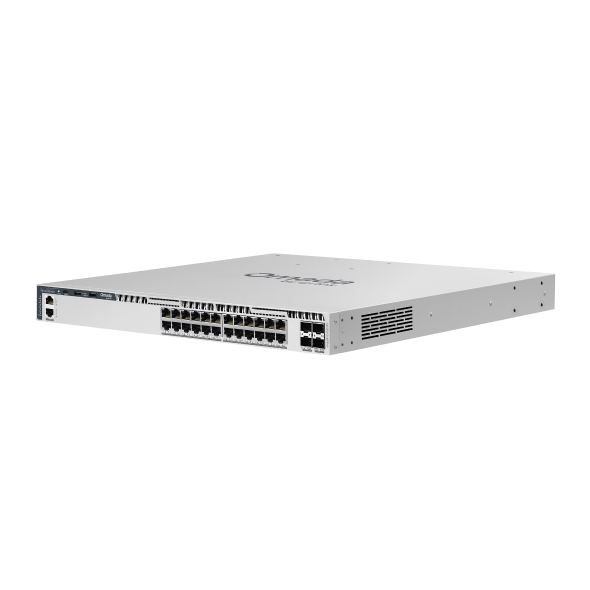
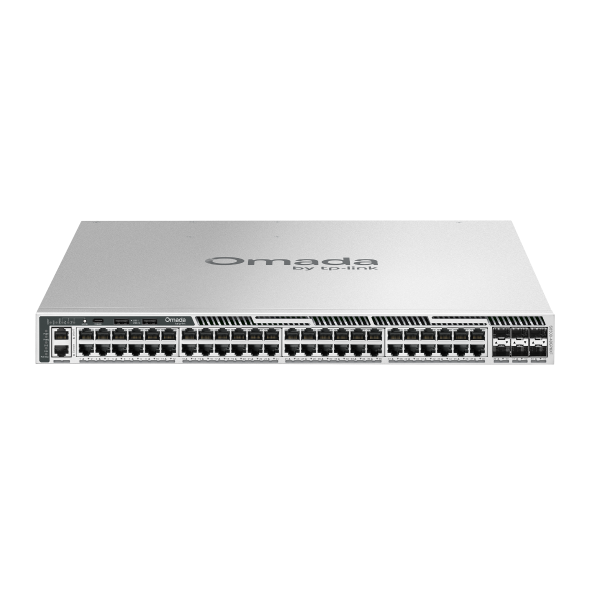
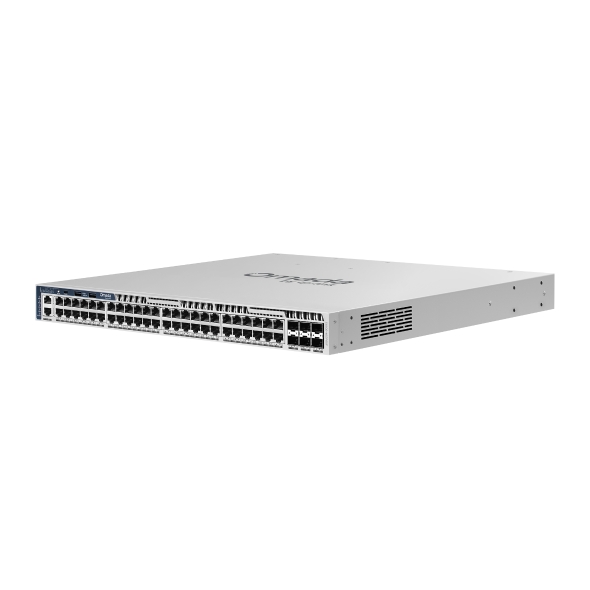
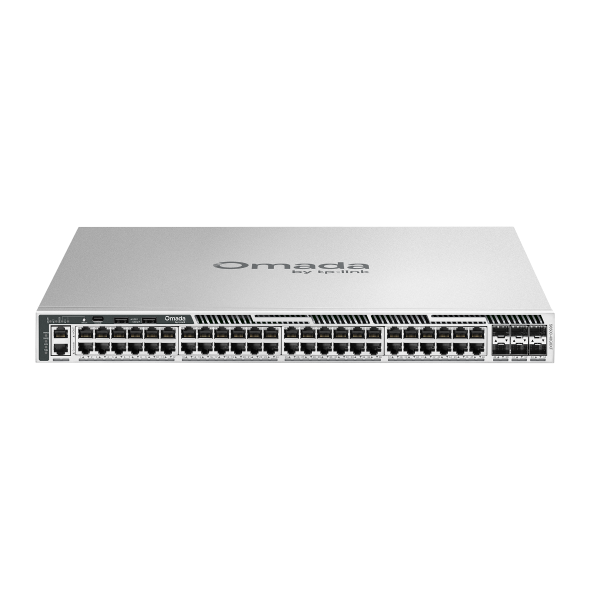
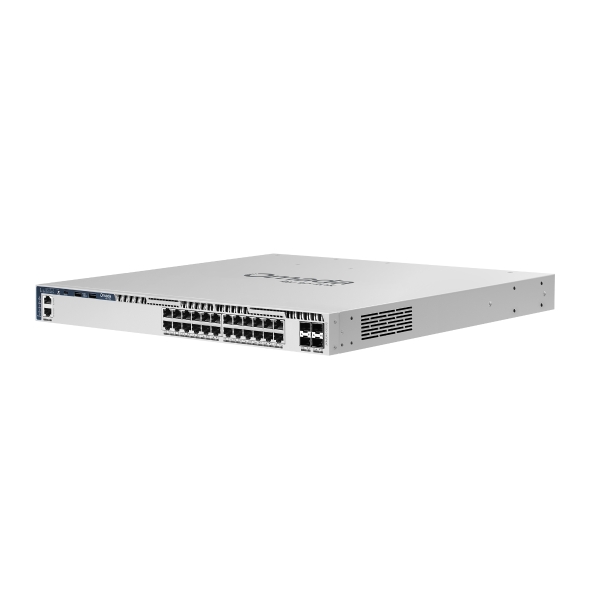
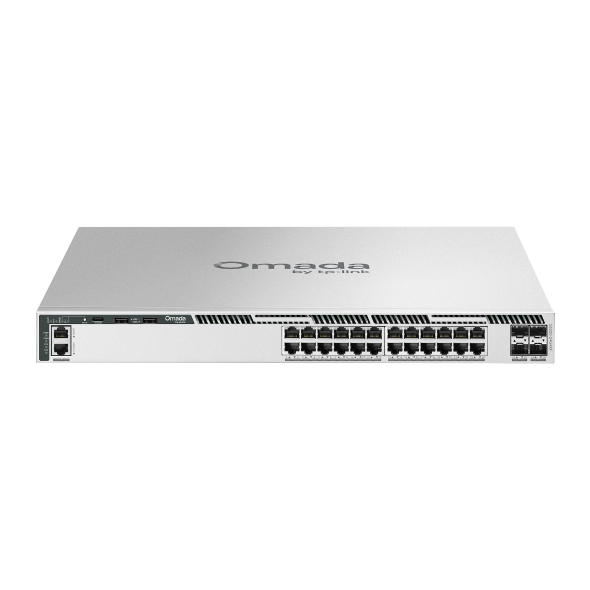
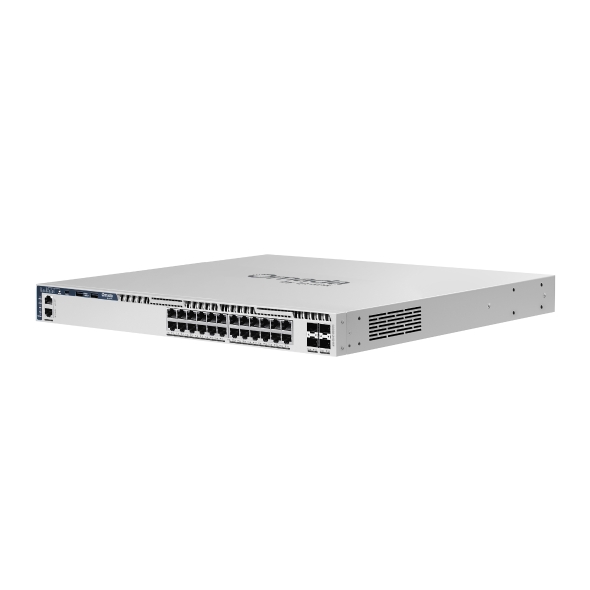
Omada Campus Series switches are built for enterprises, campuses, and ISPs that need high-throughput switching infrastructure with advanced reliability and control. With speeds up to 100G, PoE++ budgets up to 1,534W, physical stacking, and advanced Layer 3 capabilities, these switches are designed for the demands of large-scale network environments.

 |
 |
 |
 |
 |
 |
 |
 |
|
|---|---|---|---|---|---|---|---|---|
|
|
||||||||

Total Port Count |
28 |
32 |
54 |
28 |
54 |
54 |
28 |
28 |

Downlink Port |
(24) 25G SFP28 Ports |
(26) 10G SFP+ Ports |
(48) 2.5G PoE++ Ports |
(24) 2.5G PoE++ Ports |
(48) GE PoE+ Ports |
(48) GE Ports |
(24) GE PoE+ Ports |
(24) GE Ports |

Uplink Port |
(4) 100G QSFP28 Ports |
(6) 25G SFP28 Ports |
(6) 25G SFP28 Ports |
(4) 25G SFP28 Ports |
(6) 10G SFP+ Ports |
(6) 10G SFP+ Ports |
(4) 10G SFP+ Ports |
(4) 10G SFP+ Ports |

PoE Budget |
- |
- |
Max 1,484W* |
Max 1,534W* |
Max 1,440W* |
- |
Max 720W* |
- |

Console Port |
√ |
√ |
√ |
√ |
√ |
√ |
√ |
√ |

Management Port |
√ |
√ |
√ |
√ |
√ |
√ |
√ |
√ |

Physical Stacking |
√ (Max 12pcs)** |
√ (Max 12pcs)** |
√ (Max 12pcs)** |
√ (Max 12pcs)** |
√ (Max 12pcs)** |
√ (Max 12pcs)** |
√ (Max 12pcs)** |
√ (Max 12pcs)** |

M-LAG |
√ |
√ |
√ |
√ |
√ |
√ |
√ |
√ |

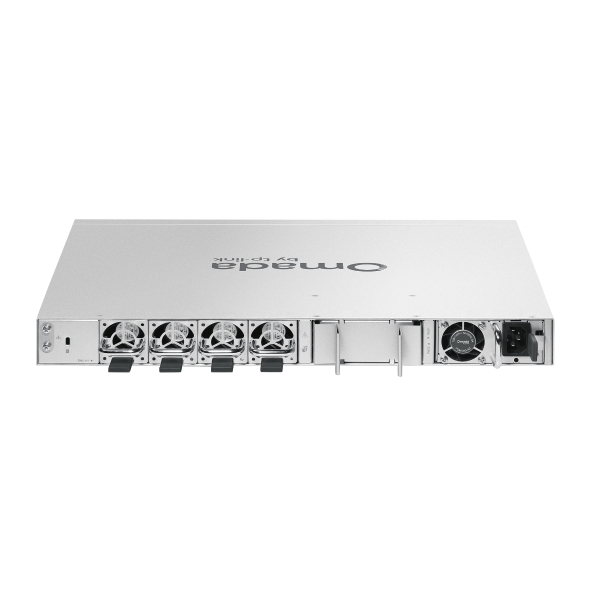
Power Redundancy |
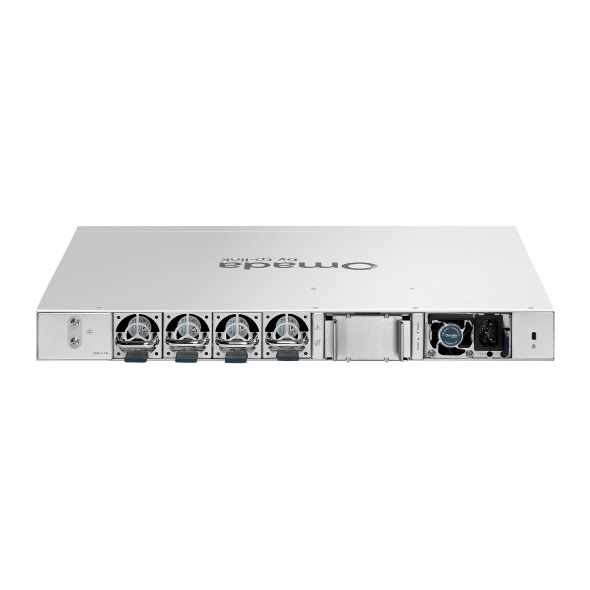
√ (Hot-swappable) |
√ (Hot-swappable) |
√ (Hot-swappable) |
√ (Hot-swappable) |
√ (Hot-swappable) |
√ (Fixed) |
√ (Hot-swappable) |
√ (Fixed) |
*The total PoE budget varies with the power supply modules.
**Supports 12 units of physical stacking in standalone mode.
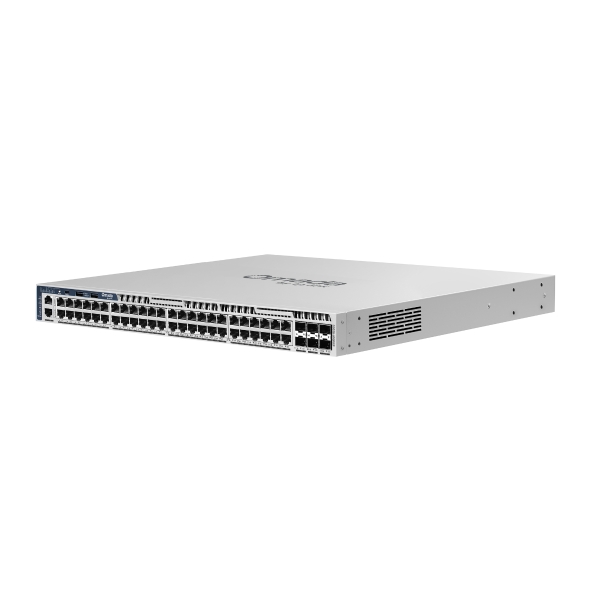
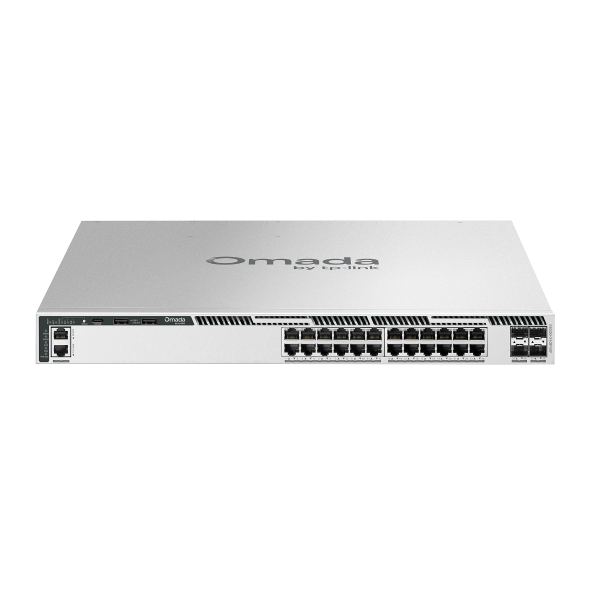
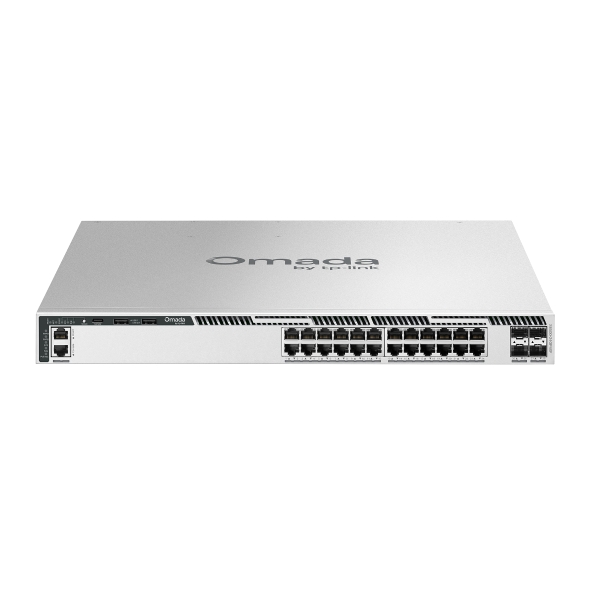
Business Benefits

High-Speed Uplinks
Uplink ports from 10G to 100G give aggregation and core layers the bandwidth to move traffic efficiently across large networks without creating bottlenecks between switching tiers.

High-Power PoE++ Delivery
Select models deliver PoE++ budgets up to 1,534W, supporting devices with higher power requirements across large deployments without the need for separate power infrastructure.

Physical Stacking Up to 12 Units
Campus Series models support physical stacking of up to 12 units (4 units in controller mode), allowing administrators to manage multiple switches as a single logical device, simplifying configuration and expanding capacity as the network grows.

M-LAG for Link Redundancy
M-LAG support across the lineup enables redundant uplinks between switches, eliminating single points of failure and maintaining connectivity if a link or device goes down.

Power Redundancy
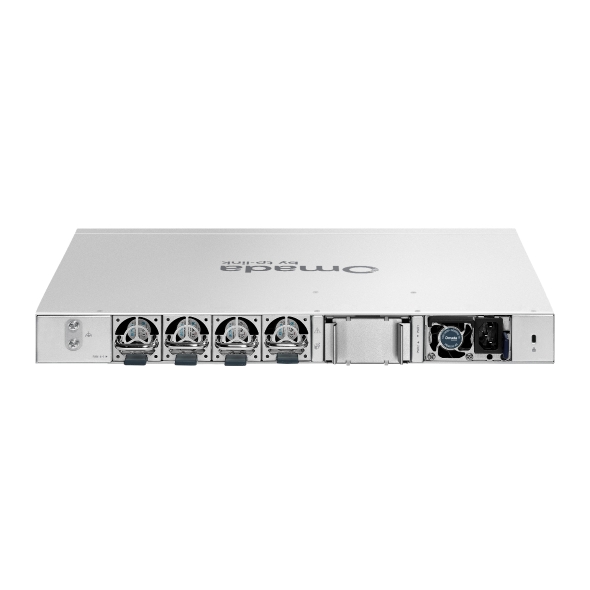
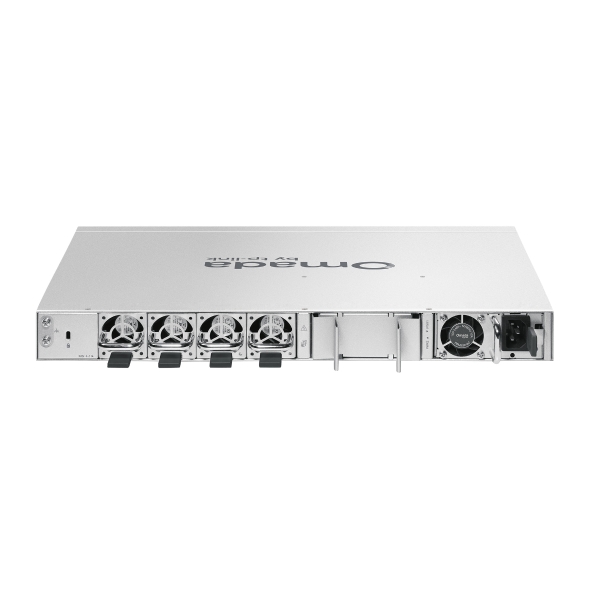
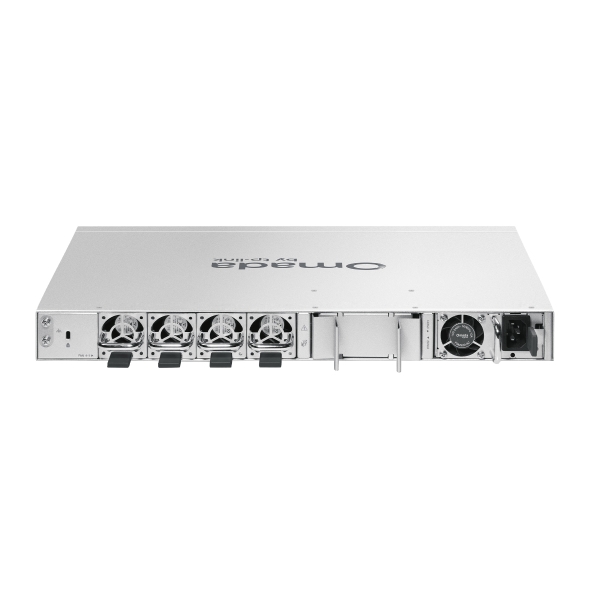
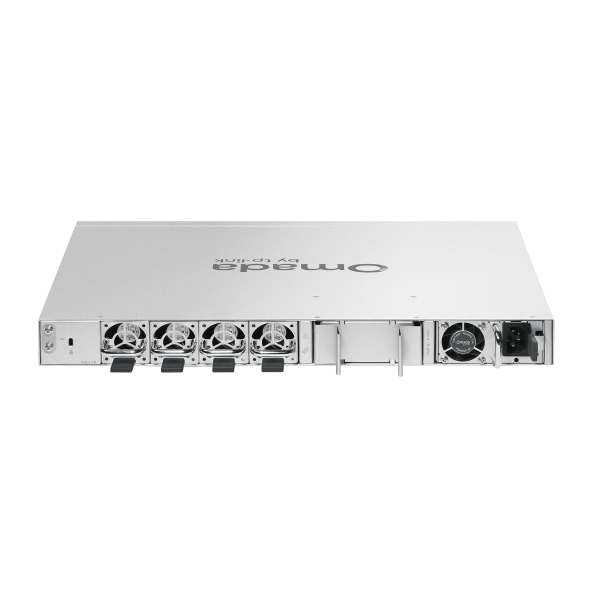
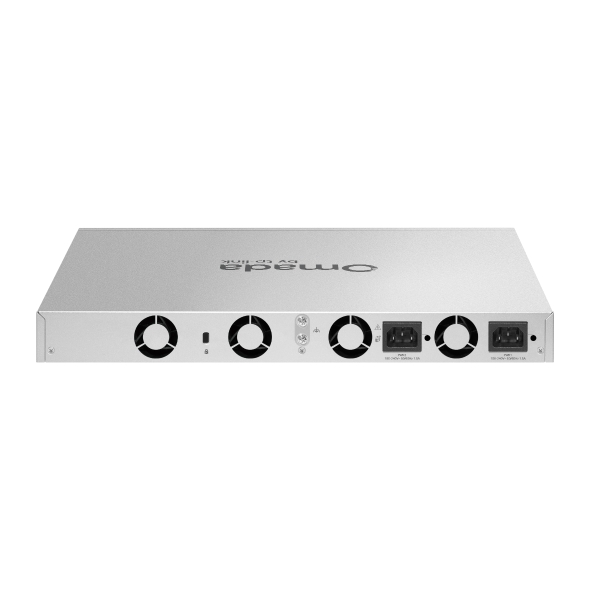
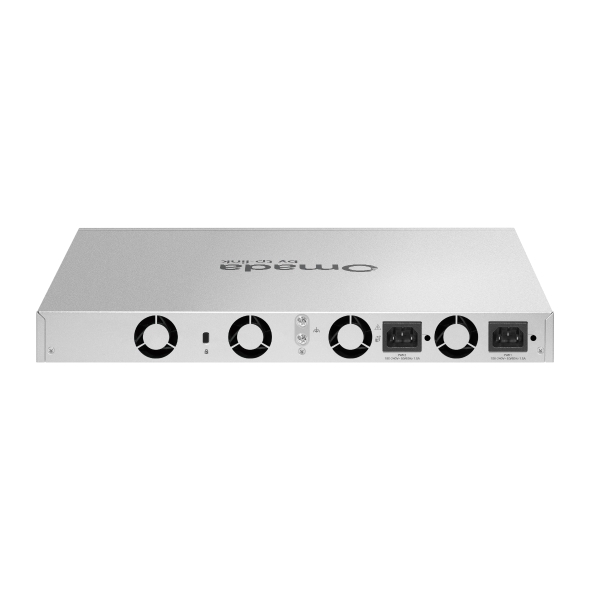
Campus Series models include redundant power supply support, with hot-swappable options on select models, so a power supply failure doesn't disrupt connected devices or network operations.

Advanced Layer 3 Capabilities
Built-in Layer 3 routing handles inter-VLAN traffic and network segmentation directly at the switch level, reducing dependency on separate routing hardware in large deployments.

Comprehensive Security Functions
Defend against a range of network threats with Secure Boot, RADSEC, IMPB, Dynamic ARP Inspection, SFTP, 802.1X, and Secure Shell. Secure Boot protects the operating system from malicious attacks.

Unified Omada SDN Management
Campus switches support centralized configuration, monitoring, and policy management through the Omada Controller, available as a hardware, cloud, or software controller, alongside other Omada networking equipment.
Solving Connectivity Challenges
Omada Campus switches serve environments where high device density, network reliability, and scalable throughput are critical requirements.
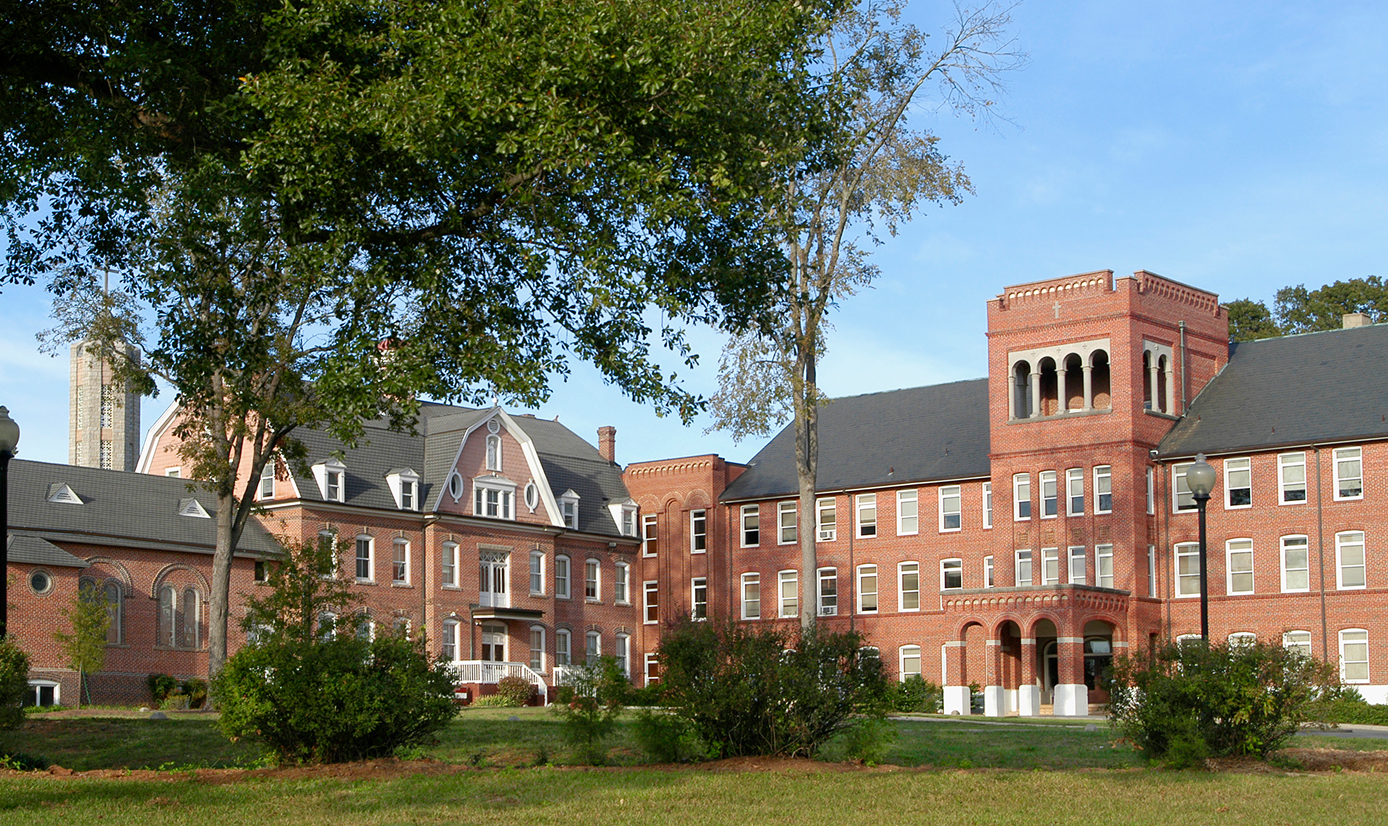
High-power PoE++ models support dense wireless and device deployments across lecture halls, libraries, and common areas, all managed centrally through the Omada SDN platform.

Aggregation-tier deployments use high-speed uplinks to consolidate traffic from multiple access-layer switches across floors, keeping VoIP, video conferencing, and cloud applications running without congestion.
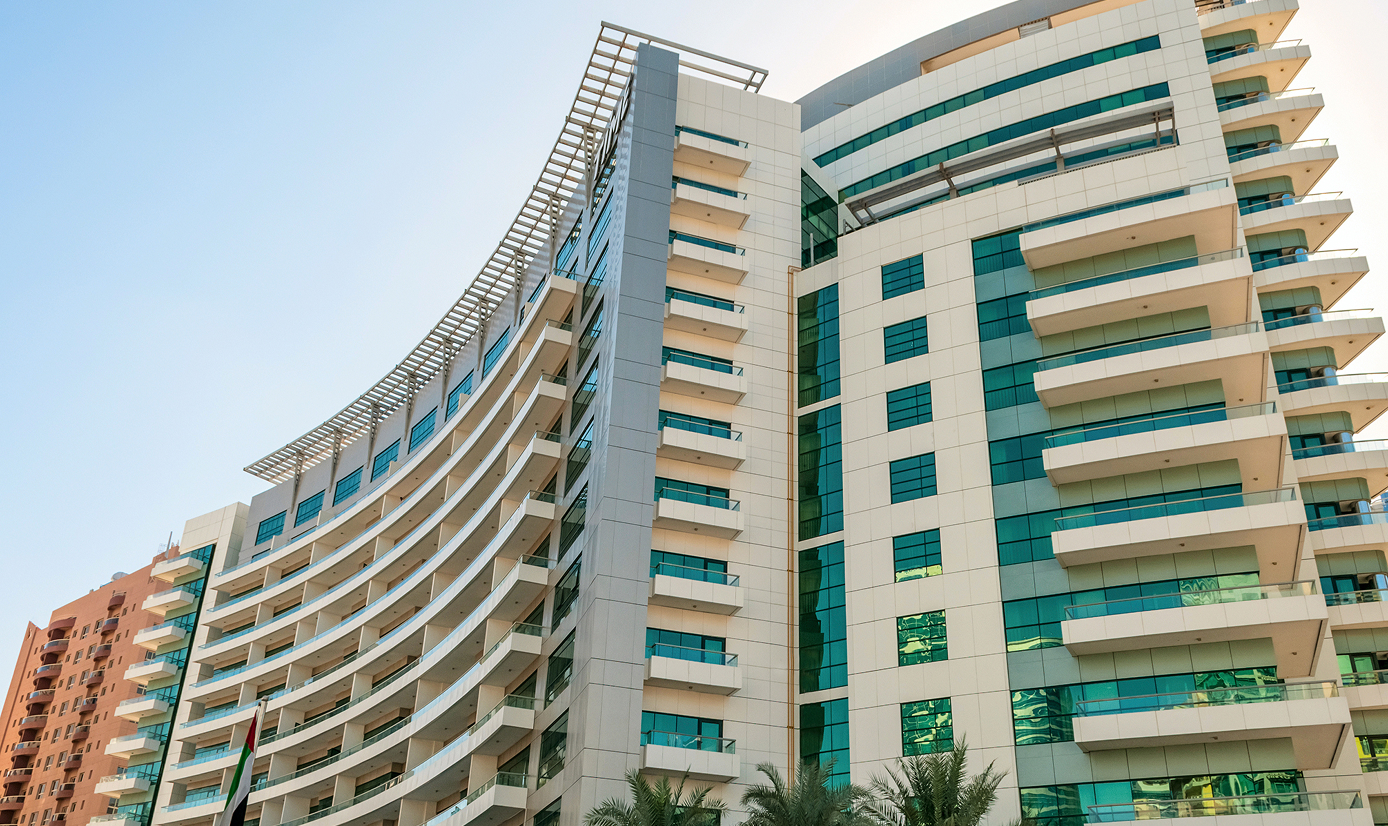
Hotels and resorts with high device density across rooms and common areas use PoE-capable models to centralize power delivery and network connectivity for access points and connected devices.
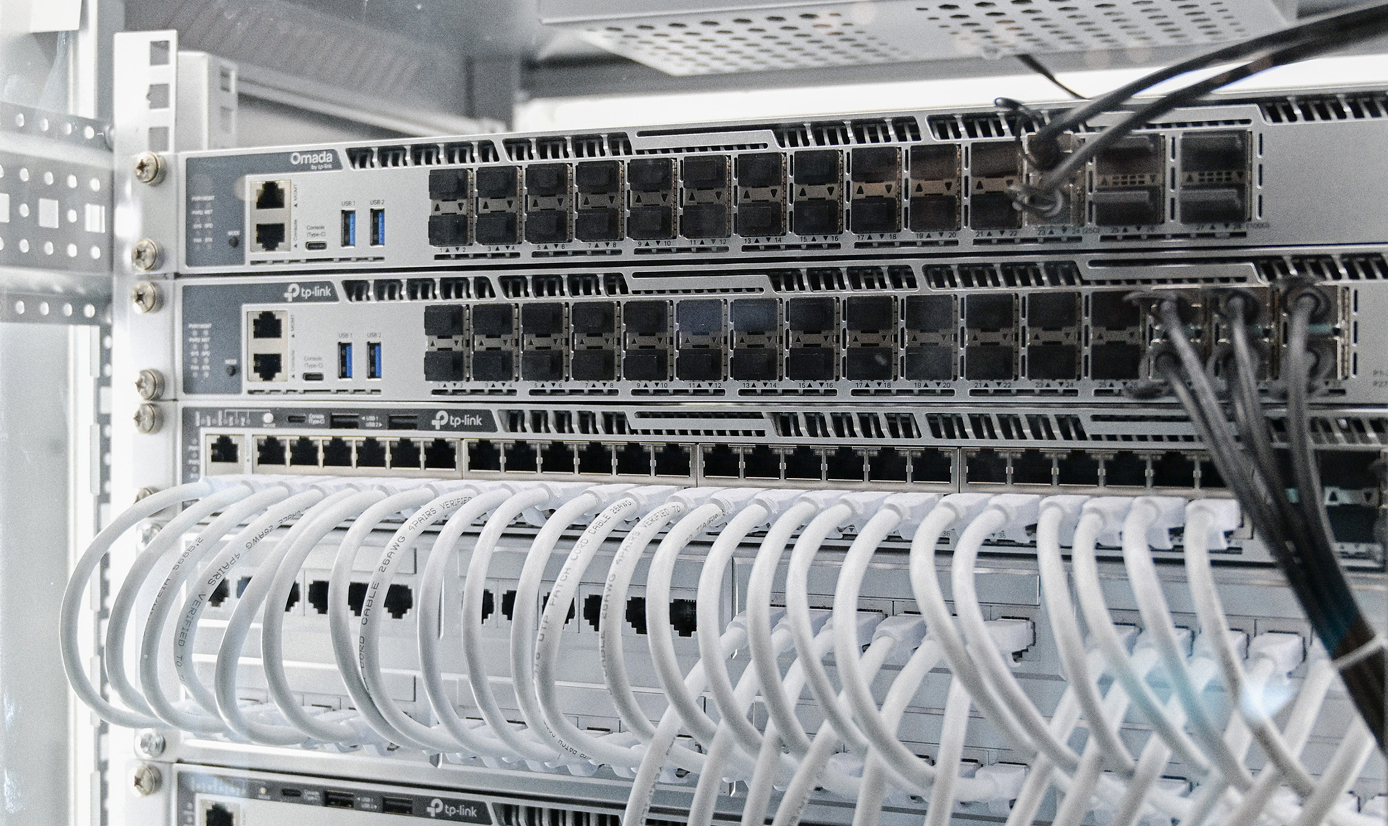
Physical stacking and M-LAG provide the redundancy and scalability ISPs need for subscriber-facing aggregation, with capacity that expands as subscriber counts grow.

Conference centers and public venues with large numbers of simultaneously connected devices benefit from high-port-density models and PoE++ budgets that support extensive wireless and wired infrastructure.

Campus Series switches can also operate at the aggregation or core layer, creating a fully integrated, scalable network architecture across large properties.
FAQs
What is a campus switch, and how is it used in enterprise networks? 
A campus switch is a high-performance managed switch designed for enterprise and institutional networks. It connects multiple access-layer switches, handles inter-VLAN routing, and provides high-speed uplinks to move large volumes of traffic across a network. Omada Campus Series switches support physical stacking, M-LAG redundancy, and advanced Layer 3 capabilities, serving as the backbone of large-scale deployments.
Are Omada Campus switches suitable for large-scale business and educational environments?
Yes. Omada Campus Series switches are purpose-built for enterprises, educational institutions, and ISPs with demanding infrastructure requirements. Physical stacking of up to 12 units, PoE++ budgets up to 1,534W, and uplink speeds up to 100G make them well-suited for large deployments where scalability, redundancy, and high device density are essential.
Do Omada campus switches support high-density device deployments?
Yes. Models with up to 48-ports 2.5G and PoE++ budgets up to 1,484W support large numbers of simultaneously powered devices across a single switch. Physical stacking extends this capacity further by allowing multiple switches to operate as a single logical unit.
Can Omada Campus switches be managed through the Omada SDN platform?
Yes. All Omada Campus Series switches integrate with the Omada SDN platform, enabling centralized configuration, monitoring, and management of these switches and other Omada devices through cloud-based, hardware, or software controllers, all from a single interface.
How do campus switches help improve network performance and scalability?
Campus switches improve performance through high-speed uplinks up to 100G, Layer 3 routing at the switch level, and M-LAG for redundant link aggregation. Physical stacking allows capacity to expand by adding units without redesigning the network, while power redundancy maintains uptime during power supply failures or maintenance.