


Media Converters
for Business Networks
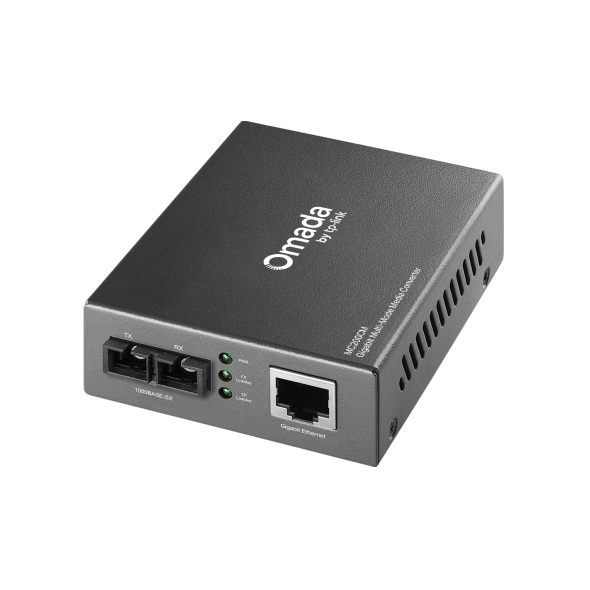
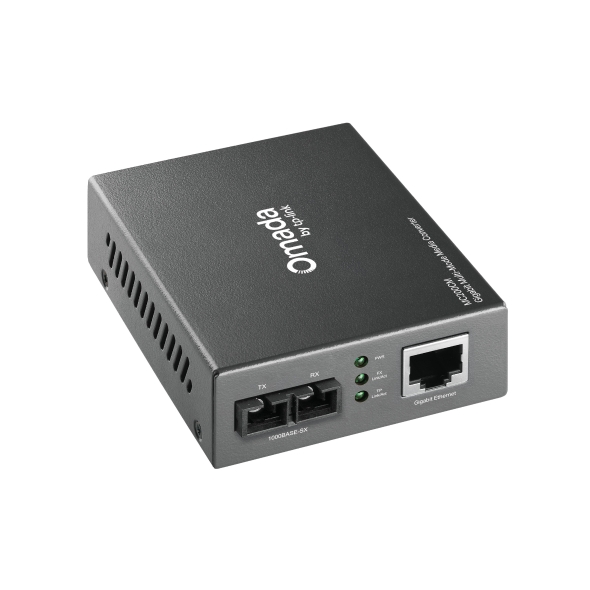
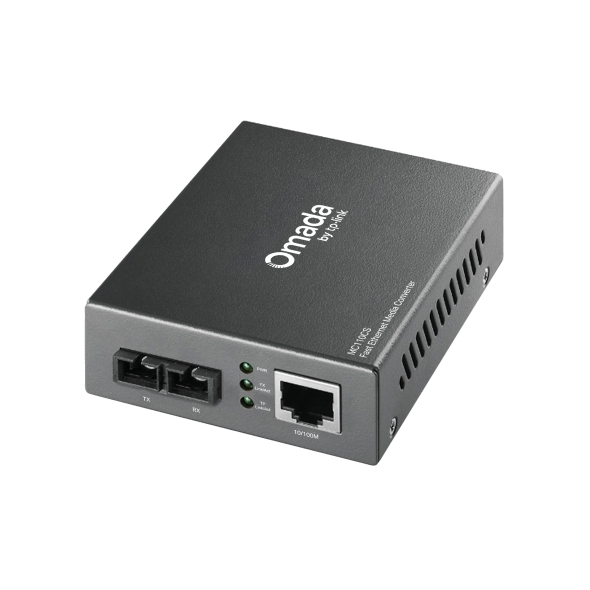
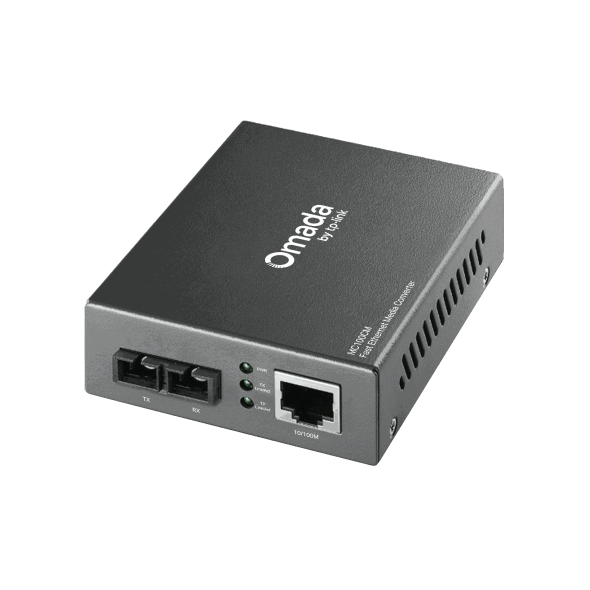
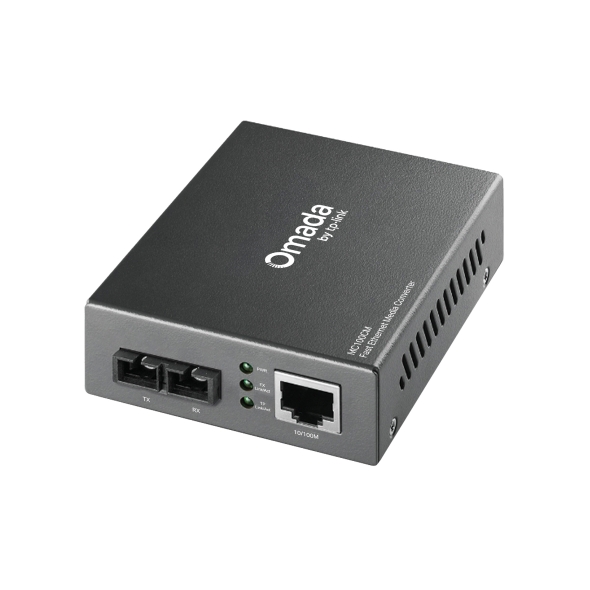
Omada media converters bridge fiber and copper infrastructure, so your business can extend network reach and integrate existing cabling into modern deployments without costly overhauls. Across campus fiber runs, legacy hardware integration, and mixed fiber environments, they provide the physical layer flexibility your network requires while keeping serviceable infrastructure intact.

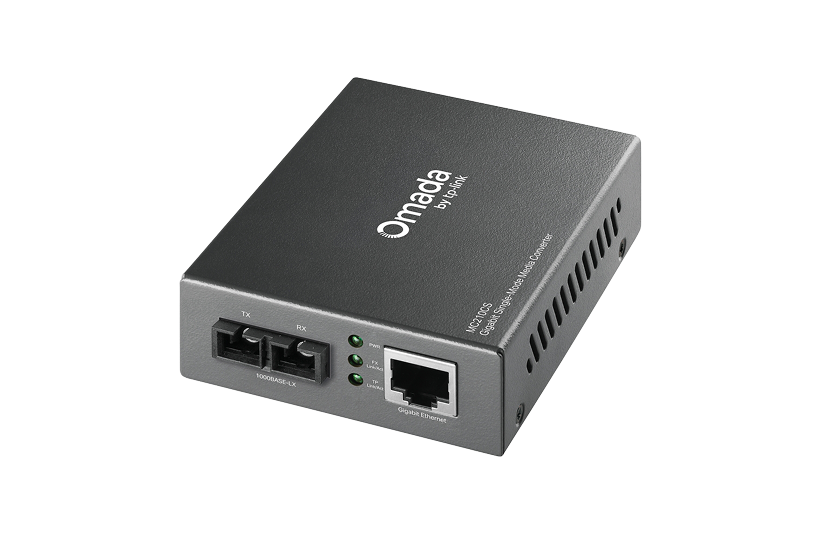




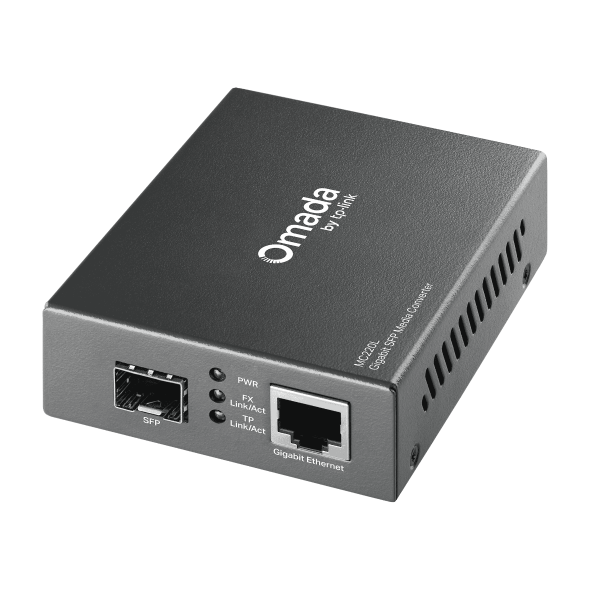
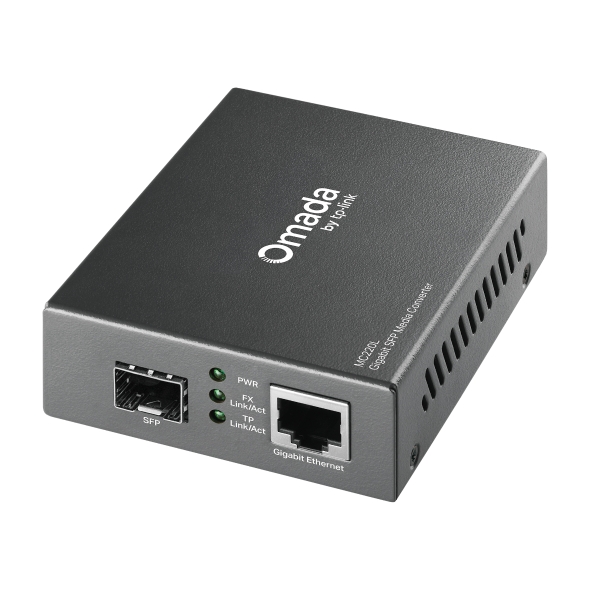
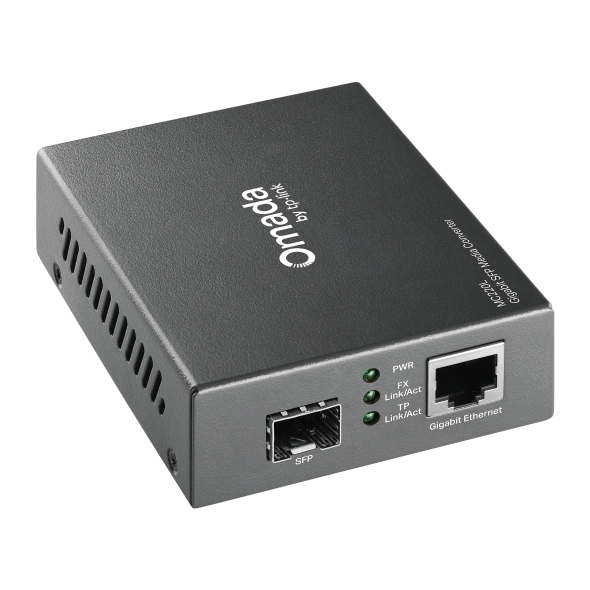
Business Benefits

Extend Network Distance
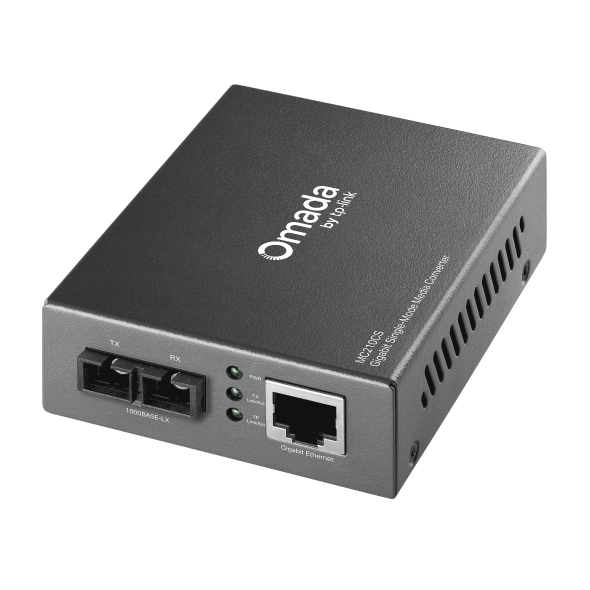
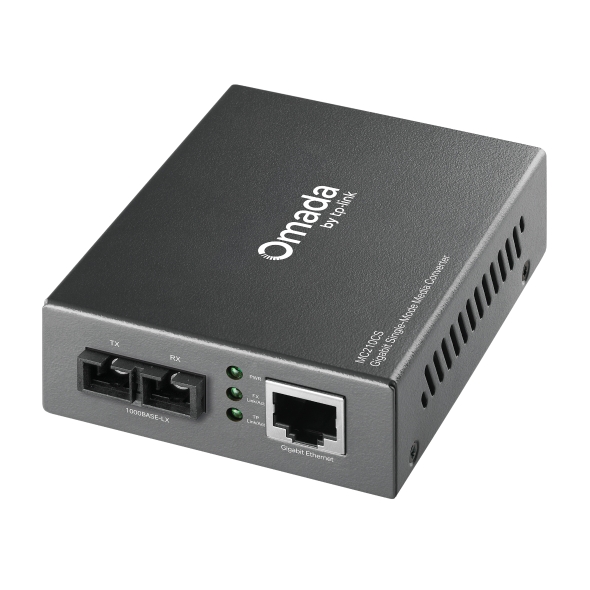
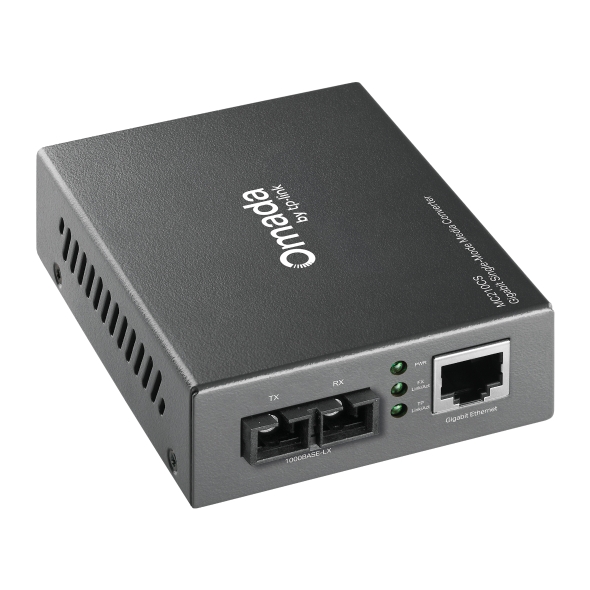
Single-mode fiber media converters extend network connections up to 20 km, linking buildings, remote equipment rooms, and distributed sites where copper cabling cannot reach.

Multi-Gigabit Speed Support
Select models support auto-negotiating speeds from 1G to 10G over a single RJ45 port, enabling high-throughput connections between infrastructure without replacing existing switching hardware.

Flexible Fiber Connectivity
SFP-based models with hot-swappable modules let you adapt fiber type and distance to each deployment without changing the converter hardware.

PoE-Powered Remote Devices
Select media converters deliver 802.3af PoE over fiber links, simplifying IP camera and remote device deployment where running power separately isn't practical.

Single-Strand Efficiency
WDM technology on select models transmits and receives data over one fiber strand instead of two, reducing fiber infrastructure requirements in space- or cost-constrained installations.

Ecosystem Integration
Omada media converters work alongside network switches to extend and connect your existing infrastructure within the Omada by TP-Link network.
Solving Connectivity Challenges
From office buildings to sprawling campuses and distributed sites, media converters address the physical layer connectivity challenges businesses encounter when copper cabling isn't enough.

Connect separate buildings up to 20 km apart over single-mode fiber without laying new copper cable or deploying additional switches between locations.
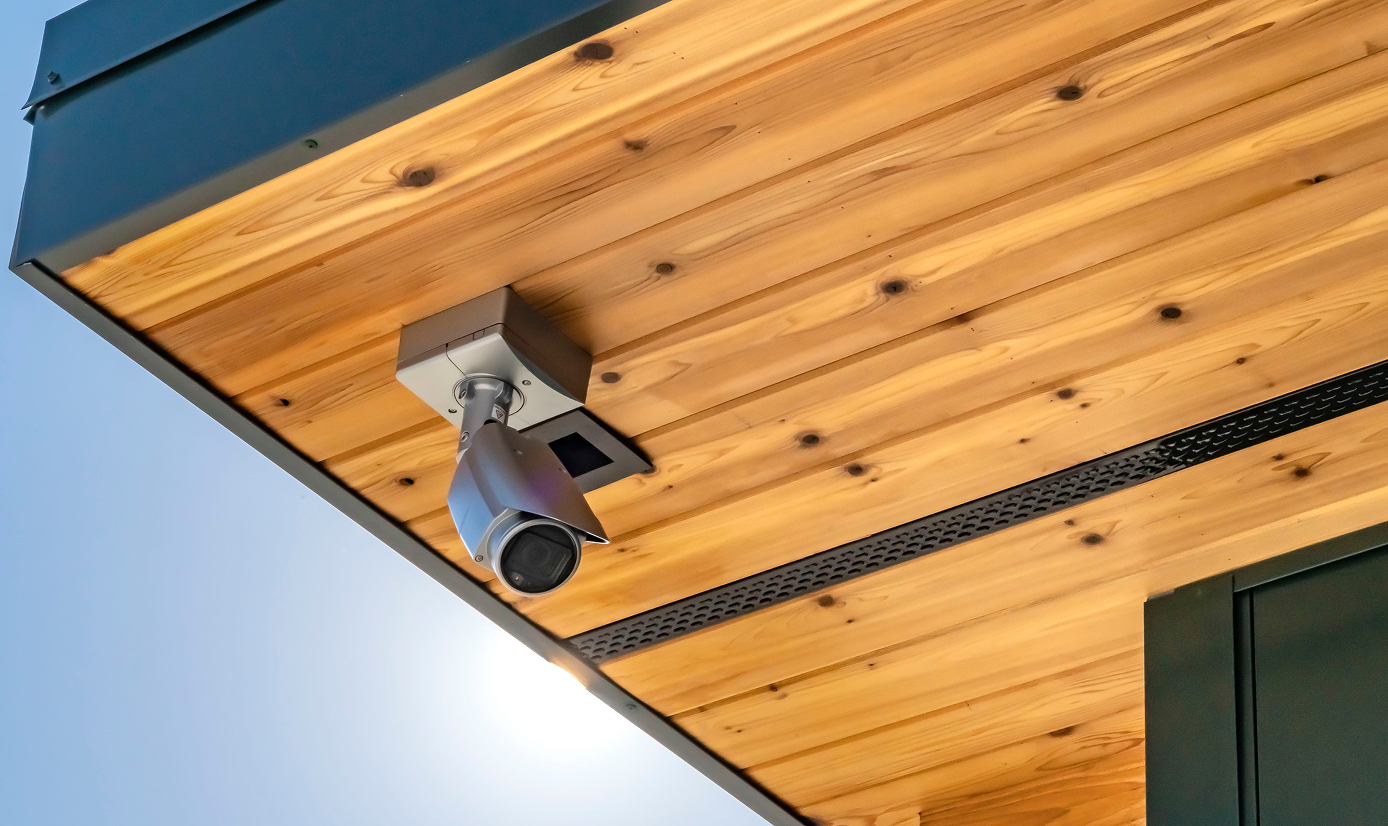
PoE-capable media converters connect remote IP cameras over fiber, eliminating the need for local power at each camera location — useful for parking areas, loading docks, or perimeter coverage.
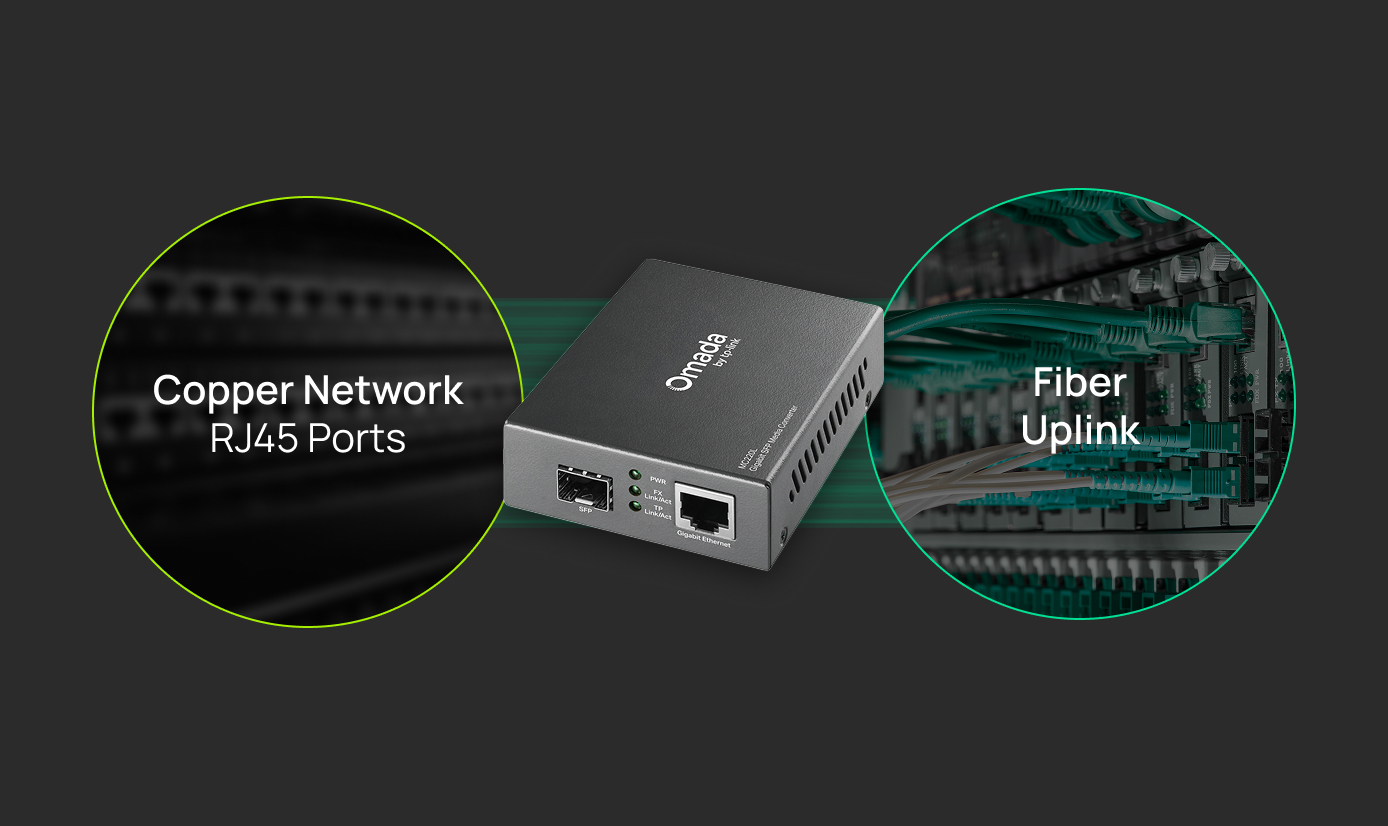
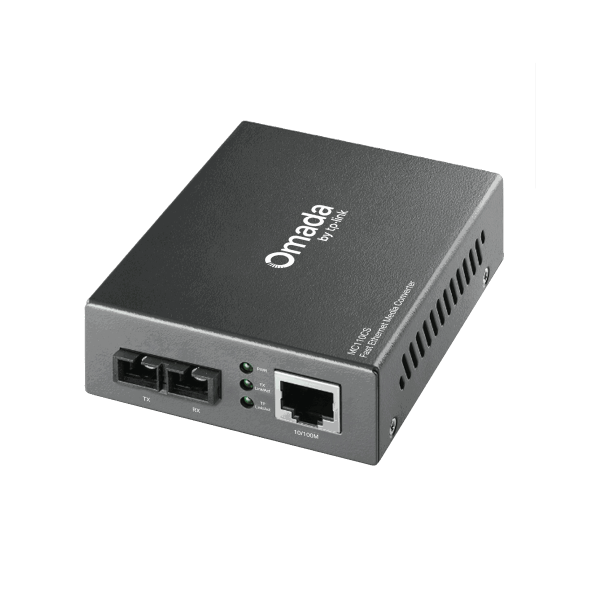
Fast Ethernet media converters bridge older 10/100 Mbps copper equipment into fiber-based primary networks, extending the life of existing hardware during phased upgrades.

Multi-gigabit media converters provide 10G conversion between fiber uplinks and copper-connected servers or switches, supporting bandwidth-intensive environments like data closets and server rooms.
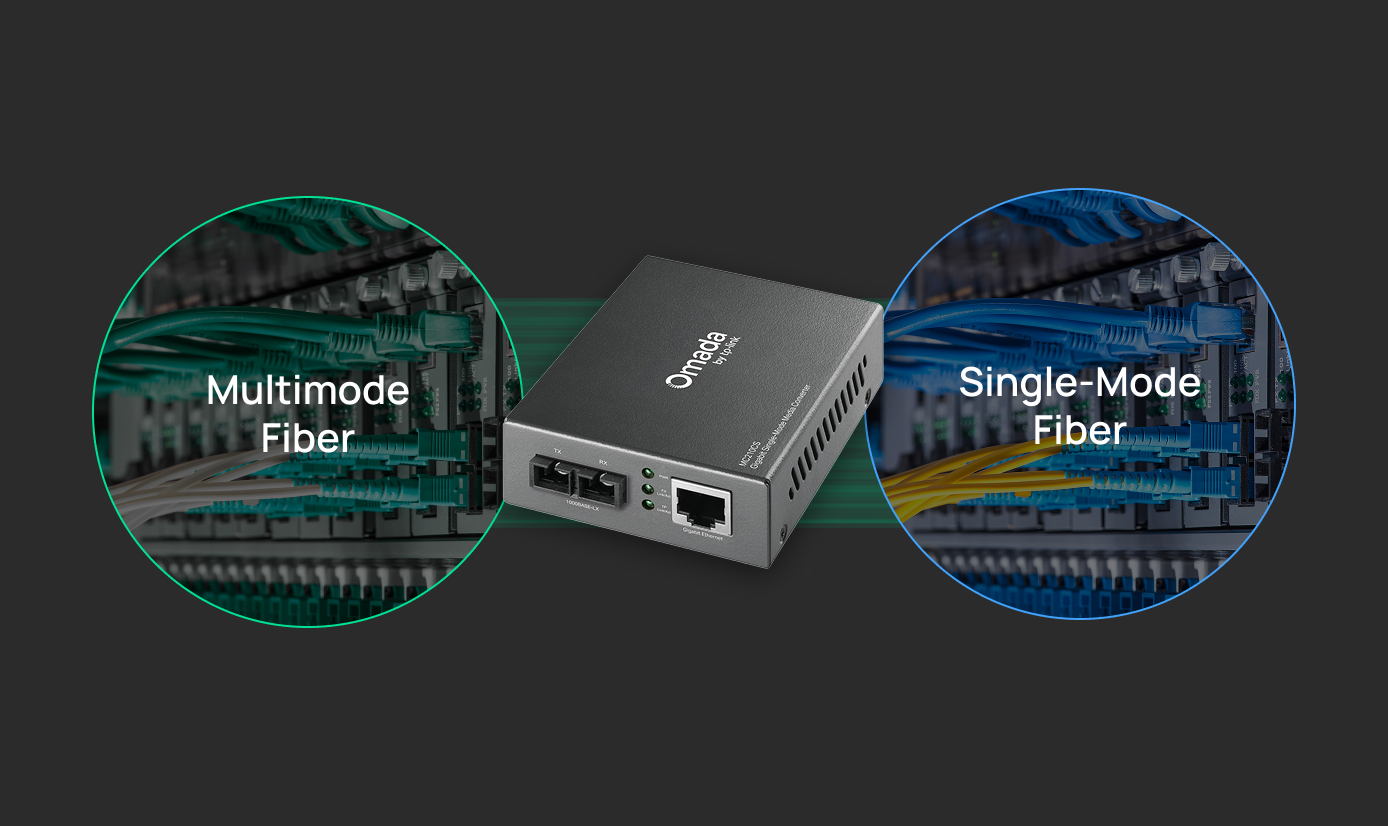
SFP-to-SFP converters link different fiber module types, connecting multimode and single-mode segments, for example, without replacing endpoint hardware on either side. Pair with Omada wireless bridges for flexible outdoor network extension.
FAQs
What is a media converter? 
A media converter is a networking device that translates signals between different cable types, most commonly between fiber optic and copper Ethernet. This allows businesses to connect infrastructure that uses different physical media, such as linking a fiber network to copper-connected switches or devices.
When should I use a media converter instead of a switch with SFP ports?
A media converter is a simpler, lower-cost option when you only need to bridge two cable types at a specific point in your network. For example, a media converter may be the best option for your business if you’re extending a fiber run to a single device or remote location. A managed switch with SFP ports is the better choice when you need switching, VLAN management, or PoE alongside fiber connectivity at the same location.
Can media converters extend network distance?
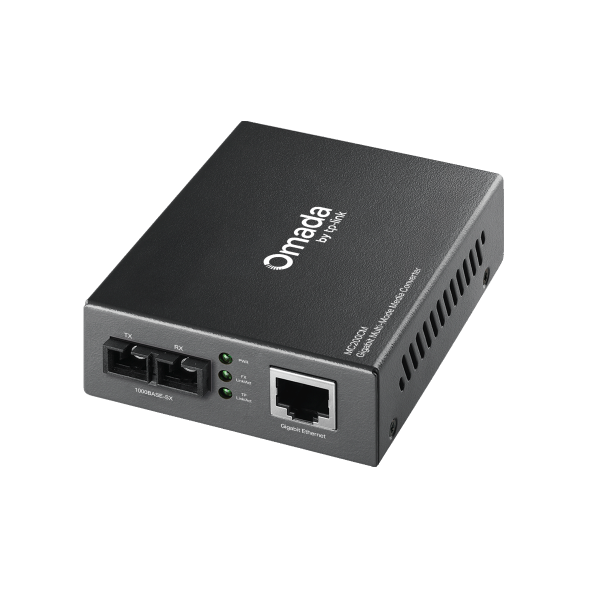
Single-mode fiber media converters extend connections up to 20 km over fiber, well beyond the 100-meter limit of copper Ethernet. Multimode models support distances up to 2 km, suitable for campus or inter-building connections.
Do media converters affect network speed or performance?
Media converters are transparent to network traffic and do not introduce meaningful latency. Speed depends on the model, and Omada's lineup includes models with Fast Ethernet, Gigabit, and Multi-Gigabit capabilities.
What types of connections do media converters support?
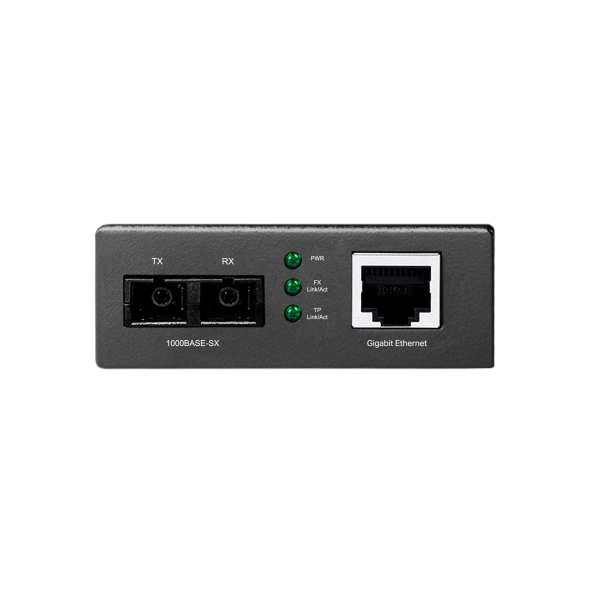
Omada media converters support a range of connection types: RJ45 copper-to-fiber (single-mode and multimode), SFP-to-RJ45 with hot-swappable modules, and WDM single-strand fiber for reduced cabling. Some models support PoE output for powering remote devices over fiber links.
Are media converters managed or plug-and-play devices?
Omada media converters are plug-and-play devices. They do not require configuration software or a controller to operate: simply connect your fiber and copper cables and the converter handles signal translation automatically.