


How to Configure Lens Distortion Correction on VIGI Camera
Contents
Introduction
Lens Distortion Correction (LDC) is a digital image processing technique that corrects the geometric distortion caused by wide‑angle lenses – for example, straight lines such as walls, roads, and horizons appearing curved. By restoring these lines to their true straight form, LDC makes surveillance footage more natural and easier to interpret. In addition, it enhances the performance of AI‑based detection, including human detection and vehicle detection.
LDC is particularly useful for fixed-angle monitoring or scenarios that require precise identification, such as entrances, exits, corridors, and parking garages.
Requirements
- InSight S385PI/ InSight S485PI
Configuration
The Lens Distortion Correction feature is available in VIGI VMS, VIGI Config Tool, VIGI App, the camera Web UI, and NVR-managed mode.
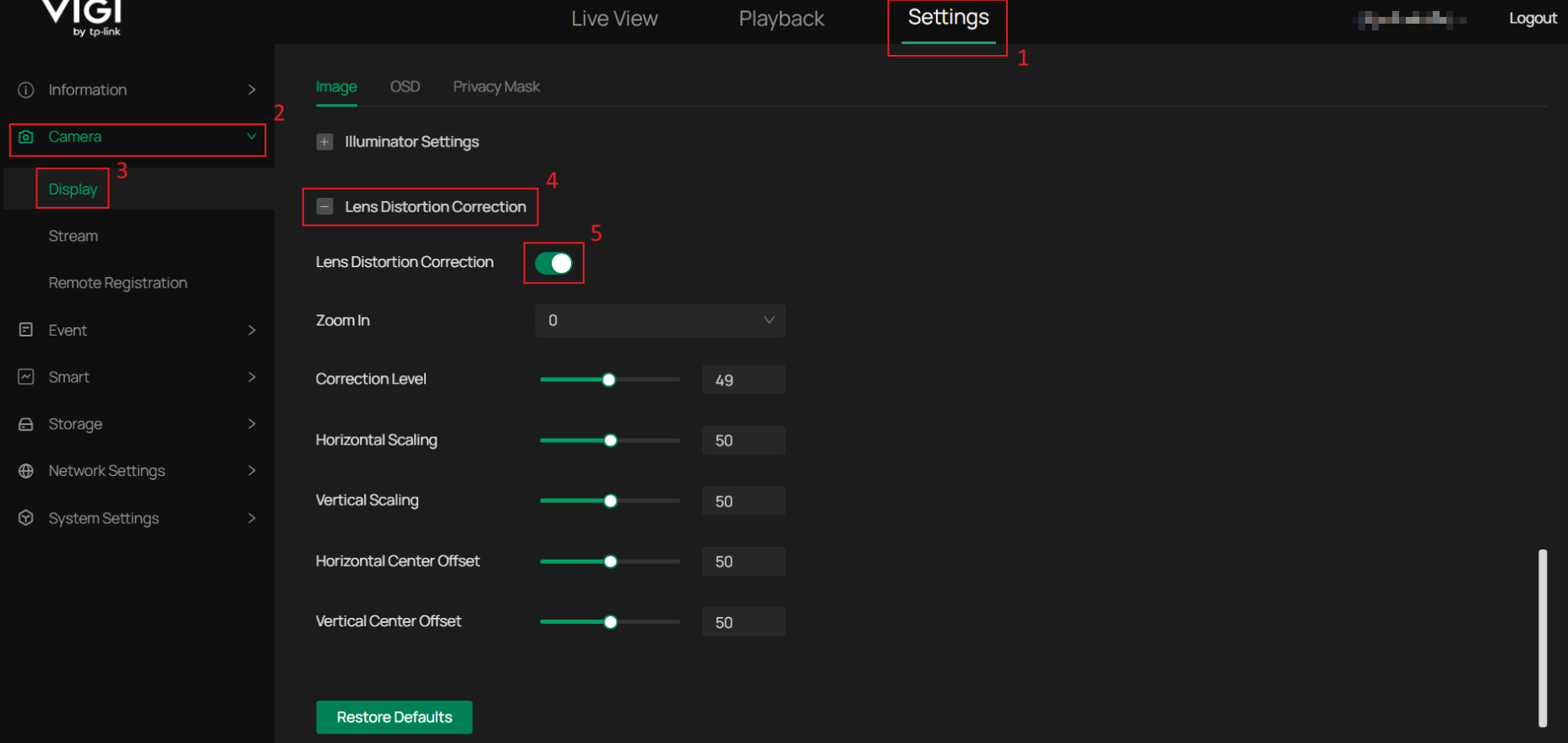
The example below uses the S385PI Web UI to show how to enable or disable LDC.
Step 1. Log in to the camera Web UI.
Step 2. Go to Settings > Camera > Display > Image > Lens Distortion Correction to enable or disable the feature. This feature is enabled by default.
Verification
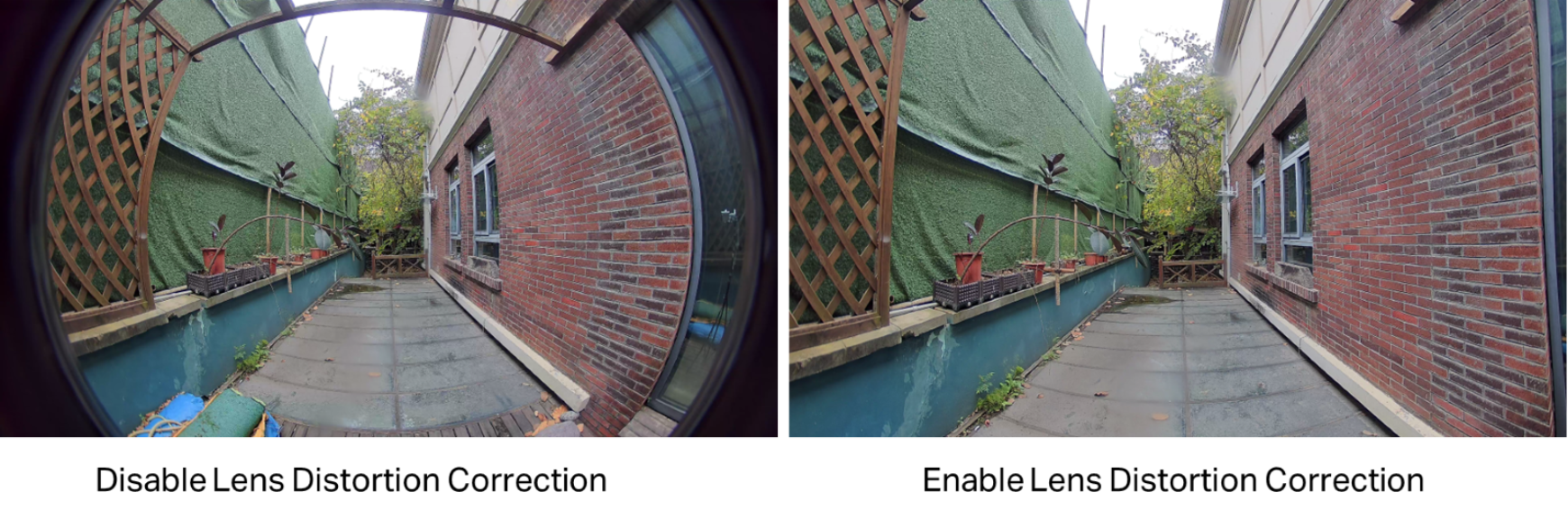
The images below show a comparison between when lens distortion correction is enabled and when it is disabled. It can be clearly seen that the distortion is significantly improved after enabling the correction, but it may slightly reduce edge sharpness, narrow the field of view, and may still have slight residual distortion.
Conclusion
Now you know when to use the Lens Distortion Correction feature and how to enable or disable it as needed.
To learn more about each function and configuration, please visit Support Home to download or check the manual for your product.
Looking For More
Is this faq useful?
Your feedback helps improve this site.



TP-Link Community
Still need help? Search for answers, ask questions, and get help from TP-Link experts and other users around the world.