


Omada network switches provide the wired infrastructure connecting access points, servers, computers, and networked equipment across your business. From small offices to multi-site operations, these switches for business integrate with the Omada Software-Defined Networking (SDN) platform for centralized management through cloud, hardware, or software controllers.
Choose Your Ideal Switches
 |
 |
 |
 |
 |
 |
 |
 |
 |
|
|---|---|---|---|---|---|---|---|---|---|
|
|
|||||||||

Port Count |
24 or 48 |
8, 16, 24, or 32 (All Fiber Ports) |
4 or 24 |
8, 16, or 24 |
24 or 48 |
5, 8, 16, 24, or 48 |
5, 8, 16, 24, or 48 |
5, 8, 16, or 24 |
4, 6, or 8 |

Downlink Speed |
Up to 25 Gbps |
Up to 10 Gbps |
10 Gbps |
2.5 Gbps |
1 Gbps |
1 Gbps |
Up to 2.5 Gbps |
Up to 10 Gbps |
1 Gbps |

Uplink Speed |
Up to 100 Gbps |
Up to 25 Gbps |
10 Gbps |
10 Gbps |
10 Gbps |
1 Gbps |
Up to 10 Gbps |
Up to 10 Gbps |
1 Gbps |

PoE Output |
Up to PoE++ |
- |
Up to PoE++ |
Up to PoE++ |
Up to PoE++ |
Up to PoE+ |
Up to PoE++ |
Up to PoE++ |
Up to PoE++ |

PoE Budget |
Up to 1,534W |
- |
Up to 770W |
Up to 770W |
Up to 1,440W |
Up to 384W |
Up to 384W |
Up to 250W |
Up to 240W |

Physical Stacking, M-LAG, MACSec, OSPF, BGP, PIM, VRRP |
√ |
- |
- |
- |
- |
- |
- |
- |
- |

Static Routing, DHCP Server, DHCP Relay, IP Interface |
√ |
√ |
√ |
√ |
√ |
√ |
- |
- |
- |

ACL, LACP, 802.1x, SNMP, CLI |
√ |
√ |
√ |
√ |
√ |
√ |
- |
- |
- |

VLAN, QoS, STP/RSTP, Loop Prevention, Static LAG |
√ |
√ |
√ |
√ |
√ |
√ |
√ |
- |
√ |

Cloud Management |
√ |
√ |
√ |
√ |
√ |
√ |
√ |
- |
√ |

Power Redundancy |
√ (Hot-swappable or Internal Fixed) |
√ (Hot-swappable or Internal Fixed) |
- |
- |
√ (Hot-swappable or Internal Fixed) |
- |
- |
- |
√ (1+1 DC Power Input) |

Mounting |
Rackmount |
Rackmount |
Rackmount |
Desktop or Rackmount |
Rackmount |
Pole, Desktop, or Rackmount |
Desktop or Rackmount |
Desktop or Rackmount |
DIN-rail or Wall-mount |
Business Benefits

Centralized Cloud Management
The Omada SDN platform manages switches alongside access points and gateways from one interface. Configure network settings, monitor device status, and troubleshoot across single or multiple sites without per-device configuration or on-site visits.

Power over Ethernet Delivery
PoE, PoE+, and PoE++ switches deliver both power and data through a single Ethernet cable to devices like IP cameras, VoIP phones, and wireless access points. This removes the need for separate power adapters and makes installations simpler in places where outlets aren't nearby. Learn more about PoE solutions.

VLAN Segmentation for Traffic Isolation
Multiple VLANs separate network traffic by purpose, keeping guest access isolated from employee devices, POS systems, and VoIP communications. This segmentation protects security.

High-Speed Connectivity Options
Choose from Gigabit switches for everyday business needs, 2.5G models for higher-speed connections, or 10G switches for bandwidth-heavy operations. Multi-gigabit ports support Wi-Fi 6 and Wi-Fi 7 access points, high-performance storage servers, and fast data transfers between locations.

Zero-Touch Provisioning
New switches pick up existing configurations automatically when connected to the network, cutting deployment time from hours to minutes. Configuration templates and site cloning allow consistent settings across locations without manual per-device setup.

Flexible Management Levels
Managed switches offer full control with Layer 2 and Layer 3 capabilities, while Easy Managed switches provide essential cloud management for surveillance and smaller deployments.

Seamless Omada Ecosystem Integration
Switches work alongside access points, gateways, and controllers as part of a unified SDN platform, allowing consistent policy enforcement and simplified administration across the complete Omada by TP-Link network infrastructure.
Solving Connectivity Challenges
Omada network switches support diverse business settings that need reliable wired connectivity and centralized control.

Connect workstations, printers, access points, and VoIP phones through managed switches with VLAN support. PoE+ ports power access points and desk phones directly, while Gigabit or 2.5G uplinks connect to servers and core infrastructure.

Retail and restaurant chains, professional services firms, and distributed businesses use cloud-managed switches to maintain consistent network configurations across all sites. Zero-touch provisioning allows new locations to come online using existing templates without technical site visits.

Conference rooms, lecture halls, and hospitality venues deploy 2.5G or 10G switches to support Wi-Fi 6E and Wi-Fi 7 access points handling hundreds of concurrent client connections. Multi-gigabit ports prevent network bottlenecks as wireless performance increases.

Weather-resistant switches extend network connectivity to outdoor and industrial environments. Rugged enclosures and extended operating temperatures maintain reliable connections in rain, dust, heat, and cold while still delivering PoE power.

Aggregation switches with fiber ports connect multiple access switches across buildings, while Layer 3 switches provide advanced routing capabilities for larger network deployments.

Businesses supporting both in-office and remote workers use managed switches with VPN gateway integration, allowing employees to access network resources securely whether connecting from the office or remotely through encrypted connections.
FAQs
What is Omada? 
Omada’s Software Defined Networking (SDN) platform integrates network devices providing 100% centralized cloud management to create a highly scalable network. Access points, switches, and routers are among the devices that can all be controlled from a single interface.
Why should I choose Omada switches?
Omada managed switches integrate with the Omada system, allowing you to easily manage them centrally via the web or the Omada app. They also support a range of management options, including CLI, web GUI, and SNMP. Enterprise-grade hardware and advanced software features make Omada switches ideal for small and medium-sized businesses, from core to edge. Comprehensive product options meet diverse needs.
Omada also offers an extended product warranty of up to 5 years (varies by region/country).* Excellent pre- and post-sales services are provided, including certifications and training, localized support teams, and dedicated Omada support. Vertical integration of supporting facilities ensures complete quality control and high-quality manufacturing.
A 5-year product warranty applies to Omada products in the US. Certain outdoor products have a 2-year warranty. Visit https://www.omadanetworks.com/us/support/replacement-warranty/ for more details.
Which switches are right for me?
Omada’s comprehensive portfolio of switching solutions is tailored for prosumers, small and medium businesses (SMBs), and enterprise networking. Except for unmanaged switches, all other series switches are integrated with Omada SDN (Software-Defined Networking) for centralized management capabilities.
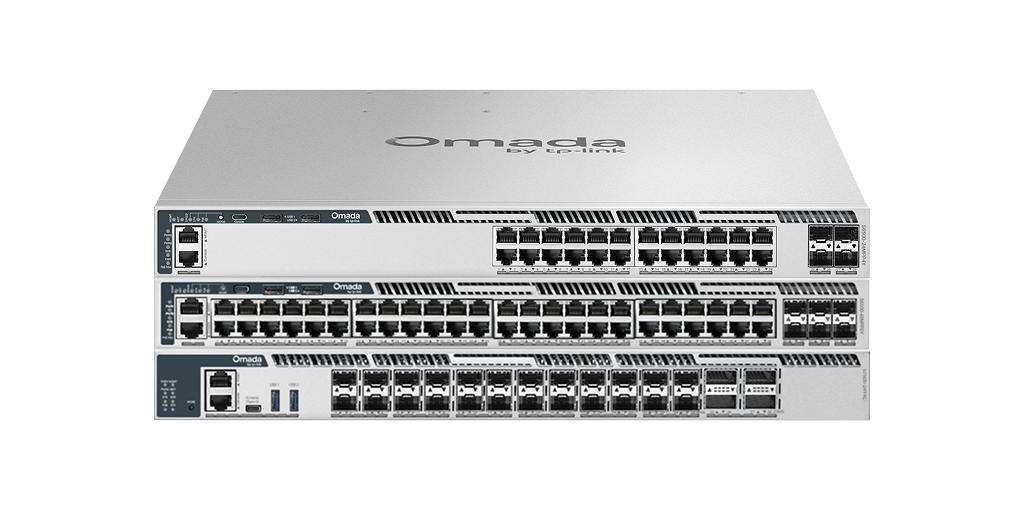
Campus Switches: Designed for enterprises, campuses, and ISPs, Campus Switches support 10G and 25G high-speed connections with a PoE budget of up to 1440W. These switches feature physical stacking and advanced Layer 3 capabilities, ensuring high reliability and scalability.
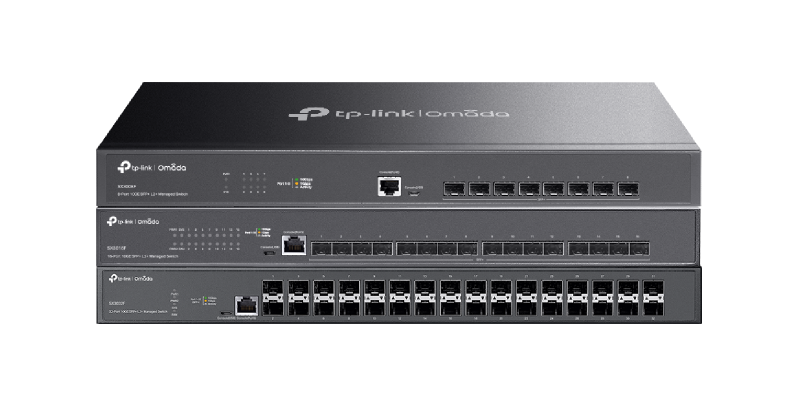
Aggregation Switches: Equipped with all-fiber ports, these provide robust and reliable solutions for the aggregation layer of SMB networks, delivering high performance and stability.
Access Max Switches: Featuring full 10G ports, these switches are perfectly designed for the seamless deployment of flagship Wi-Fi 7 access points.
Access Pro Switches: Providing 2.5G multi-gigabit connectivity and compliant with PoE++, these enable the deployment of Wi-Fi 6 and entry-level Wi-Fi 7 access points.
Access Plus Switches: Designed for high-density edge deployments, these switches include 10G uplinks that overcome gigabit uplink bottlenecks, ensuring efficient and scalable connectivity.
Access Switches: Delivering cost-effective Gigabit Ethernet solutions for SMBs, these switches ensure reliable and efficient network performance.
Agile Switches: Provide an affordable upgrade from unmanaged to cloud-managed solutions, enabling streamlined setup, remote monitoring, and troubleshooting, ideal for surveillance networking.
Industrial Switches: Engineered for harsh environments, these feature rugged industrial-grade hardware, a wide operating temperature range, and strong protection against electrical interference.
Unmanaged Switches: Plug-and-play products with no software configuration required. PoE and non-PoE are optional.
What is a PoE switch, and how do you choose one?
Power over Ethernet (PoE) is a technology that enables network switches to transmit power and data simultaneously over a single Ethernet cable. Omada PoE switches provide effective solutions for connecting numerous PoE-compatible devices such as VoIP, IP cameras, and access points, meeting the needs of most common business scenarios. Beyond basic features, Omada PoE switches offer much more, including up to 820 ft (250 m) of PoE transmission, port prioritization, and remote camera rebooting. When selecting PoE switches, consider the managed features, number of ports, port speed, PoE budget, and PoE type.
What's the difference between managed and unmanaged Omada switches?
Managed switches integrate with Omada controllers for centralized configuration, VLAN assignment, ACLs, and remote monitoring across single or multiple sites. Within managed switches, Easy Managed models provide cloud management with features optimized for surveillance networking, including extended PoE transmission and remote camera rebooting. Unmanaged switches are plug-and-play devices without configuration options, suitable for basic connectivity where management features aren't required.
Can Omada switches be mixed with non-Omada network equipment?
Omada switches support 802.1Q VLAN tagging and standard networking protocols, allowing them to operate on networks with existing equipment. However, centralized management through Omada controllers works only with Omada managed devices (excluding unmanaged switches). Non-Omada equipment on the same network would need to be managed separately through its own interface.
How do Omada switches support VLANs and network segmentation for businesses?
Omada switches support VLANs and network segmentation for businesses through the Omada Software-Defined Networking (SDN) platform, which supports 802.1Q VLAN tagging. Layer 3 switches provide advanced capabilities for managing network traffic across VLANs. This setup helps isolate different types of traffic, improving security and network performance.
Are Omada switches suitable for high-density or enterprise-scale deployments?
Omada offers switches ranging from small business deployments to enterprise-scale networks. Campus switches support 10G and 25G connections with PoE budgets up to 1,440W, physical stacking, and advanced Layer 3 capabilities. Aggregation switches equipped with all-fiber ports provide solutions for the aggregation layer of networks, while multi-gigabit switches with full 10G ports are designed for the deployment of Wi-Fi 7 access points.
Recommended Omada Switches
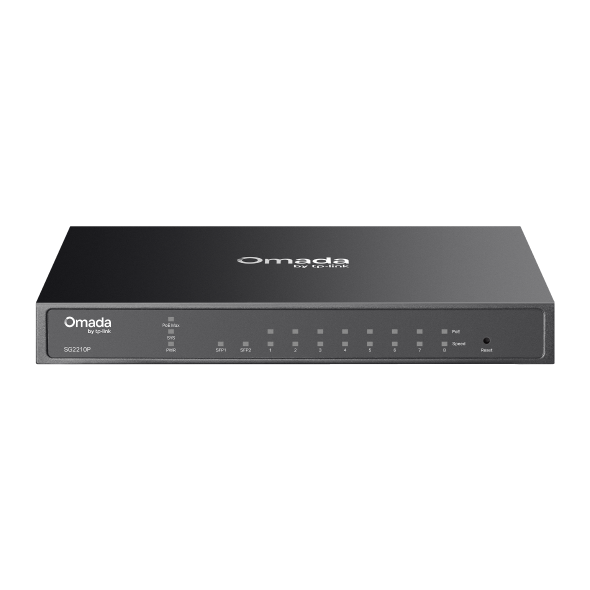
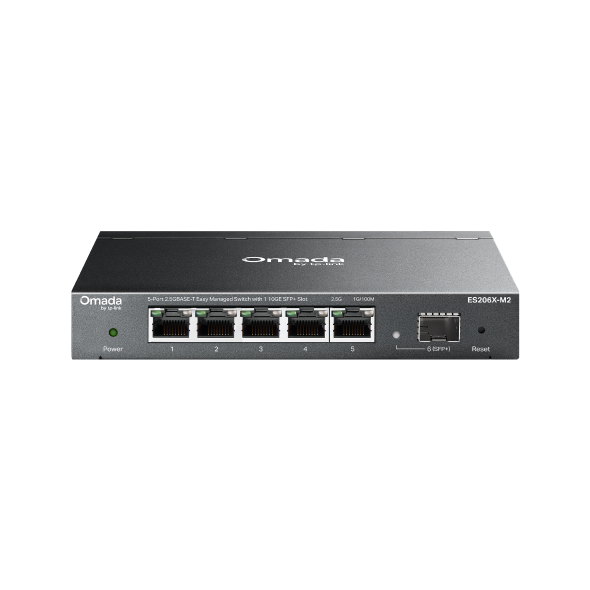
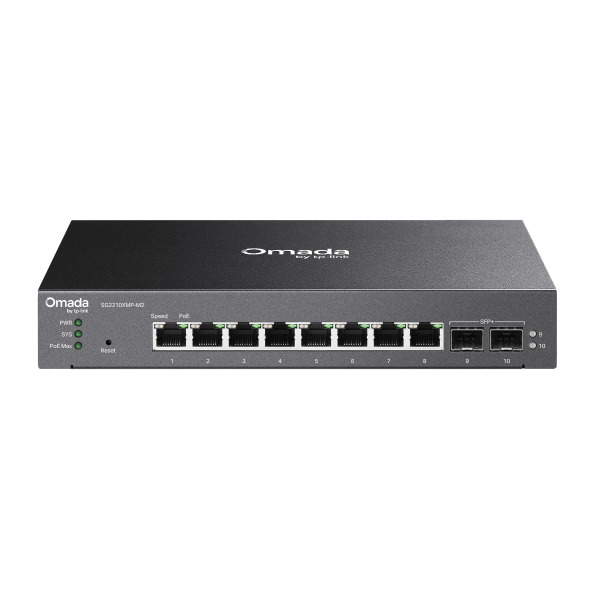
SG2210XMP-M2
Omada Access Pro 8-Port 2.5G and 2-Port 10GE SFP+ Switch with 8-Port PoE+
View Product >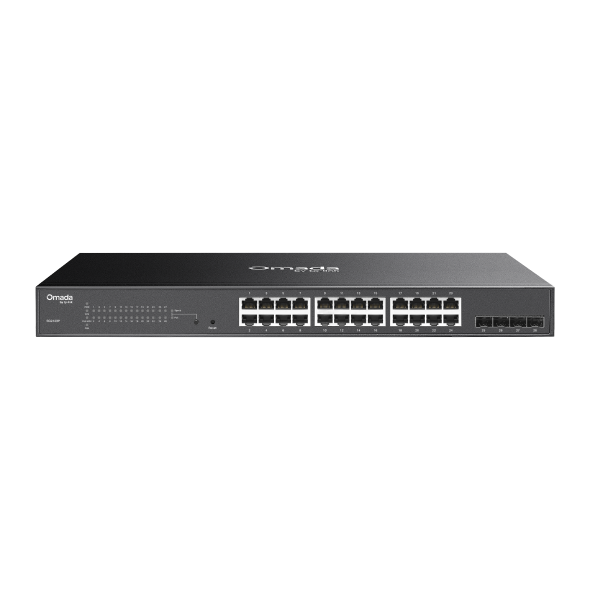
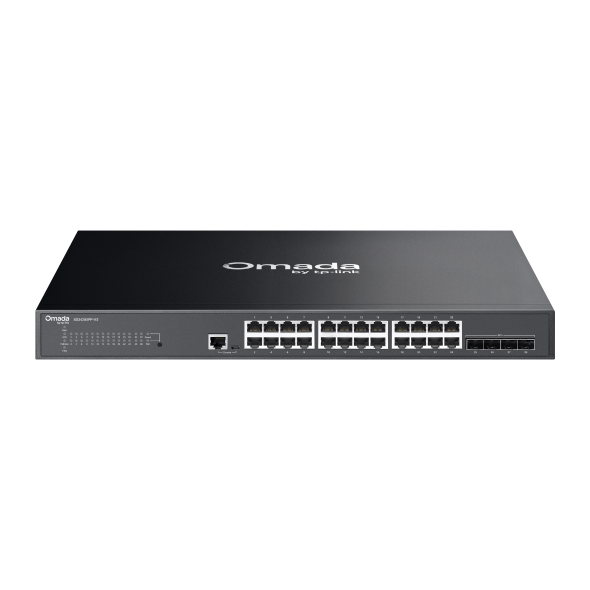
SG3428XPP-M2
Omada Access Pro 24-Port 2.5G and 4-Port 10GE SFP+ Switch with 24-Port PoE++
View Product >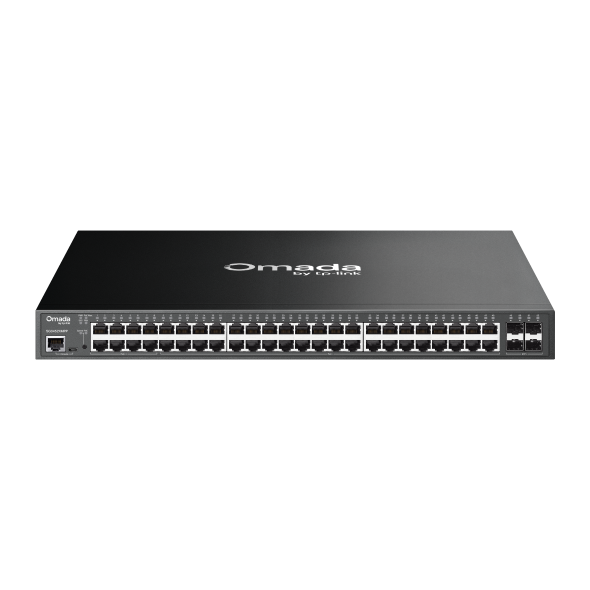
SG3452XMPP
Omada Access Plus 48-Port Gigabit and 4-Port 10GE SFP+ Switch with 40-Port PoE+ & 8-Port PoE++
View Product >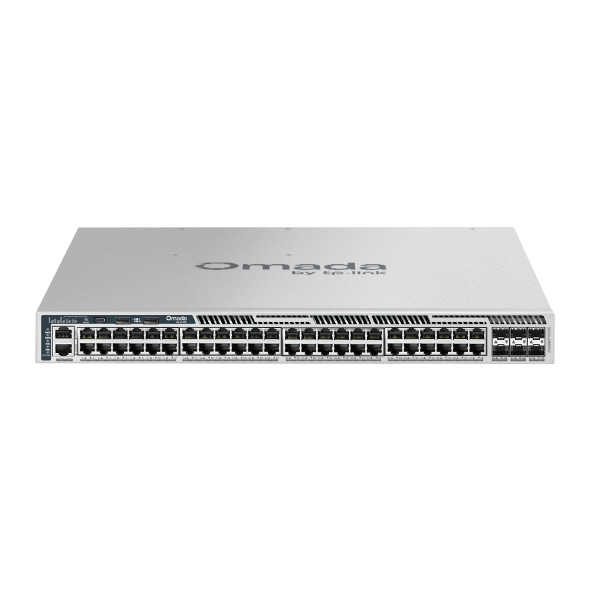
S6500-48MPP6Y
Omada Campus 48-Port 2.5G Stackable L3 Managed PoE++ Switch with 6× 25G Slots
View Product >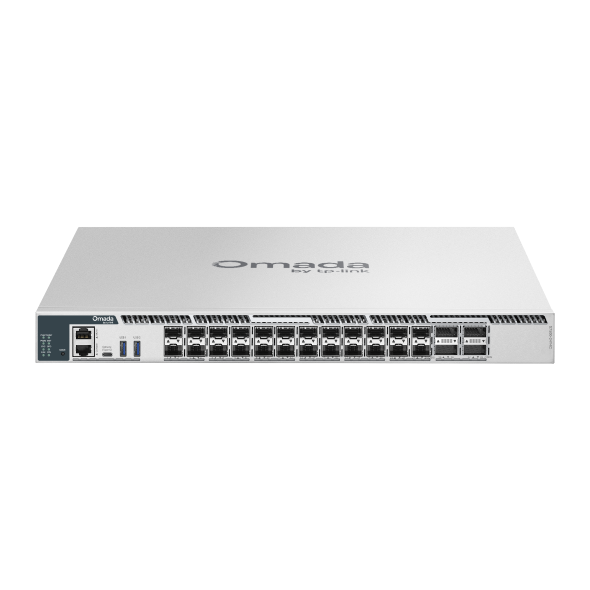
S7500-24Y4C
Omada Campus 24-Port 25G Stackable L3 Managed Aggregation/Core Switch with 4× 100G Slots
View Product >